Posts
Posts


Kolhapur is a town whose history can be traced
 back to the 9th century (and there have been excavations found which date to as far back as the First century BC). It is now quite prosperous - it reportedly is one of the towns with the highest sales of Mercedes cars in the country and we saw showrooms selling top end bikes costing more than a lakh of rupees (USD 2000) as also these "buggies" which are apparently bought for kids to drive around the "farmhouse" - price? another lakh of rupees. The wealth is mostly fuelled by the sugarcane industry - a co-operative industry (if you can call it that)which provides the cashflow as well as votes to many a successful politician from this region.
But other than the material wealth, there is also the richness of culture which this corner of south-west Maharashtra is steeped in. The Mahalakshmi temple is one of the famous landmarks - the legend goes that the Goddess vanquished the demon king Kolasur - and as his dying wish, the city was named after him. More than the temple, I love poking around those small shops around its periphery - the ones where you get those typical green bangles, the lovely vermillion powder (kumkum), small religious knick knacks -silver crowns for idols, tiny silk "sarees" in red, green and gold for the goddess in your home - , flowers and what not.
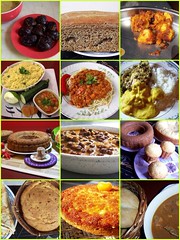
The people are warm and hospitable to a fault. Apart from the Kolhapuri chappals (hand stitched leather thongs) and Kolhapuri mirchi (chillies) which everyone usually hears of - Kolhapuri cuisine is quite distinct. Their tambda rassa (red curry with goat meat) and pandhra rassa (white mutton stock soup) are signature dishes of Kolhapur along with the sukka mutton (stir fried goat meat). Not being a fan of red meat (I find it far too difficult to digest) what I really enjoy in this part of the country is the simple Maharashtrian vegetarian fare - moogachi usal (whole green gram sauted with spices and coconut), amti, varan bhaat, bhakri (sorghum flour flat bread) and sol kadi (a tangy,mildly spiced drink made from coconut milk and kokum fruit extract). Then there's the snacks which beckon - wada pav, misal...


But what intrigued me most this trip is coming across huge green houses - 57 acres of horticultural operations run right next to a sugar mill by the second generation scion. They grow flowers fo
 r the export market as well as the domestic market and with huge investments and lot of technology have managed to make this a lucrative business while diversifying from the cyclical sugar industry. It also provides employment to the local population of women (who were traditonally restricted to ancilliary jobs in the sugar industry) who tend to the flowers with the requisite care and diligence. There were rows and rows of multi coloured gerberas, delicatedly shaded roses and the most exquisite orchids - the profusion of flowers dazzled our senses.

I marvelled at the sense of enterprise which fuels this part of the country - even the farmers here seem to be so much better informed than their counterparts in the North. While the cane production deficit is fuelling a steep rise in prices, it makes sense that the farmer should think of shifting to alternatives which will provide a better income to him - this is indeed a different way of thinking from the traditional mindset of cane being a "lazy" crop which requires hardly any tending and no need for marketing the produce which is all bought up by the co-operative at pre -fixed prices.
I will leave you with this picture of some wonderful strawberries which I found on the lane outside the Mahalakshmi temple while buying kandi peda (milk based sweet), bhadang (spiced puffed rice) and pohe chivda(spiced beaten rice) - sweets and snacks which are some of my childhood favourites!