Showing posts with label mutton. Show all posts

Wednesday, February 1, 2012

Individual Bolognese Pot Pies

What do you do when you have some lovely leftover meat ragu from a Spaghetti Bolognese dinner? Why you bake them into dainty little pot pies!


Spaghetti Bolognese is a favourite at home but doesn't get made often because we don't eat mutton that often and plus its best to have during the winter when you don't mind a slightly heavier meal. I usually make use my tried and tested Bolognese recipe, but this time I tried Emeril Lagasse's recipe with a few changes and it was really delicious!

I then had quite a bit of the ragu leftover so a couple of evenings later, I reduced it down to a thicker consistency and add some peas as well. Portioned it out into small ramekins (use bigger ones for single potions) and then rolled out some puff pastry to cover it. Baked it for about 15 minutes and voila! dinner was ready. I made some small cut out shapes of the pastry to decorate, but its really not necessary.


For the Ragu Sauce 

Olive oil - 2 tsp

Mutton mince - 300gm

Bacon - 4 strips chopped

4 chorizo sausages - chopped finely or crumbled

Onions - 2 medium, chopped

Carrots - 1 medium, diced

Tomatoes - 5 pureed 

Tomato puree - 1/4 cup

1 stock cube (chicken or beef) dissolved in 300ml of water

Red wine - 3/4 cup

Garlic - 2 cloves, chopped finely

 Bay leaves - 2

Freshly crushed black pepper - 1/2 tsp

Red chilli powder - 1/2 tsp

Cumin powder - 1/2 tsp

Dried oregano - 1 tsp

Cinnamon powder - 1/2 tsp

Sugar - 1 tsp

Milk - 1/4 cup 

Cooked Spaghetti - 300gms

Parmesan powder - to serve

1. Take a pan and heat the olive oil in it. Add the bacon and cook till browned and fat is rendered - about 3-4 minutes.
2. Stir in the onions and carrots and cook for 4 minutes till soft. 
3. Next add the bay leaves, garlic, salt, pepper, red chilli powder, cumin powder, cinnamon powder and oregano and saute for a minute.
4. Add the mutton mince and finely chopped sausages and fry for 5 minutes till they are browned.
5. Add the red wine and cook for 3 minutes breaking up any browned bits sticking to the pan.
6. Add both the purees, the stock and sugar and bring to boil. Reduce heat to medium and simmer covered till the sauce is thickened - about an hour and fifteen minutes. 
7. Add the milk and check the salt. Stir well and remove from heat and keep warm. Serve over cooked spaghetti sprinkled with parmesan powder for Spaghetti Bolognese.
 
For the pot pies:
Peas - 1/4 cup
Puff pastry - one sheet for the entire quantity or 1/2 or 1/4 if only working with leftover sauce
Egg - 1, beaten with 1 tbsp water
- add the peas and continue cooking for another half hour till the sauce is much thicker in consistency.
- Spoon into individual ramekins leaving about half an inch at the top for the pastry
- Roll out puff pastry on a floured surface and cut out circles which will fit inside the ramekins (I didn't tuck the pastry inside which I will do next time)
- Brush the pastry with the egg wash and cover the ramekins tucking in the edges.
- Make slits on top of the pastry to vent. You can decorate by cutting small shapes with cookie cutters from the pastry bits left over and then just pressing down lightly over the top of the pastry cover.
- Bake in a pre heated oven at 200C for 15 minutes or till the top is golden brown and flaky.


Wednesday, November 23, 2011

Lamb Chilli with Pumpkin and Kidney Beans

 Chili Con Carne - the classic stew with Mexican origins but now known more as a part of Tex-Mex cuisine - has long fascinated me. The flavours of the various chillies that are used in it and the method of slow cooking the meat in a rich gravy always made me wonder how it would taste. I still don't know what the real deal is - BUT I can say that I have made my own version of it and it was much appreciated!


There were a couple of substitutions involved of course - not having access to the different kind of peppers or spice powders - habanero, poblano, chipotle etc - I had to come up with a spice mix of my own which I did after consulting a few recipes for chili spice mixes, online. I also substituted beef mince with goat's meat mince - what we call mutton in India. And instead of a crockpot, I simmered it for a couple of hours in my rice cooker.

I served it with some French bread and Spaghetti Aglio e Olio and by the end of the dinner with friends, there wasn't much left over. There's something about a slow cooked stew which has had time for the flavours to come together (I made it the previous day) which makes for a great meal - especially one shared with dear friends.


 Lamb Chili with Pumpkin and Kidney Beans  
(adapted from this recipe from Kalyn's Kitchen)
Mutton Mince (I used goat's meat, you can use lamb) - 750gms
Rajma (kidney beans) - 1 cup soaked overnight and cooked in a pressur cooker
Pumpkin - 350 gms chopped
Bell peppers - 2
Garlic - 3-4 cloves
Onions -2 diced
Green chillies - 3 chopped
Tomatoes - 6 chopped
Chilli powder - 1 tsp
Cumin powder - 1 tsp
Chili spice mix (store bought or see below for homemade) - 1 tbsp
Beef stock cube (or chicken stock cube) - 2 cubes dissolved in 1 litre water


Spice Mix
Red chillies - 5
Coriander seeds - 1 tbsp
Cumin seeds - 1 tsp
black pepper - 1 tsp

Roast and grind to a fine powder and mix with

dried thyme - 1 tsp
dried oregano - 1 tsp
onion powder - 1 tsp
garlic powder - 1 tsp

Run through the blender one more time

1. Heat 2 tbsp of olive oil in a pressure pan or pressure cooker and saute the mince in it for about 8-10 minutes till browned. Remove and keep aside.
2. In the same pan, heat 1 tbsp of oil and saute the onions and the bell peppers for 3 minutes, then add the garlic, chili powder, cumin powder, chili spice mix and saute for a couple of minutes more. Add the tomatoes and pumpkin pieces and saute for 3 minutes till soft.
3. Add the beef stock and salt and bring to a boil, close the pressure pan and cook for 2 whistles on high and then lower flame and cook for 5 minutes.
4. When cool enough, release pressure, open cooker and add the cooked kidney beans - mash about half a cup of the cooked kidney beans. Check seasoning and pour into a rice cooker.
5. Switch on the rice cooker and making sure there is enough liquid, cook for 90 minutes to 2 hours till the stew reduces to a thick consistency.  Stir occasionally and check for the seasoning adding cumin powder or spice powder or chili powder depending on the overall taste. (Alternatively, you can cook the dish on the stove top in a heavy bottomed vessel for about an hour)
6. Serve (preferably after keeping overnight in the fridge) with coarse bread or rice. (I served it with Spaghetti Aglio e Olio - a simple spaghetti dish tossed with olive oil, garlic and chilli flakes garnished with cheese - I also added some bacon)

Monday, September 5, 2011

Andhra Keema Curry


 The Taj Lands End apparently makes a mean Keema Pau (lamb mince with rustic bread) - or so I hear from hubby who stays there sometimes. He was hankering for some keema on a weekend and telling me about this dish they have on the breakfast buffet and how he really likes it. So, I put on my best snob accent and tell him there is no way a swanky hotel can hope to recreate authentic keema pau. Now an Irani restaurant - that's the place to have a good plate of keema pau!

But since the hankering was for keema, I decided to cook some Andhra mince curry from this recipe in Sailu's Kitchen. Good decision - the dish is as good as it looks. This was the first time my daughter had mince and she loved it. She ate it for the next three meals (in small quantities) - with roti, rice and bread! Since, hubby had the keema pau in mind, I adapted this recipe to make it much drier than the original version.Sailu's version is a thick gravy like dish. Mine is not only drier, its also pretty spicy I think - I added more chilli powder to enhance the colour and that seems to have done the trick.
 

Andhra Keema Curry

My adapted recipe which makes it more robust and a little more fiery:

Ingredients:1/2 kg minced goat meat (mutton keema), washed thoroughly and drained
2 onions finely chopped
2 tomatoes, finely chopped
1tbsp ginger garlic paste
curry leaves - handful
Green chillies - slit - 3-4
Kashmiri chilli powder - 1 tsp
Red chilli powder - 1/2 tsp
Garam masala powder - 1/2 tsp
2 tbsp oil and 1 tsp ghee
coriander leaves for garnish

Dry roast the spices and powder
1/2 tbsp coriander seeds
1/2 tsp cumin seeds

3 dry red chillis
Methi seeds - pinch
Saunf - 1/4 tsp

(I omitted the poppy seeds from the original recipe because I didn't want the creaminess it gives)

Method:
1 Heat oil and ghee in a pressure cooker, add the green chillies, onions and saute till the onions turn transluscent. The ginger garlic paste goes in next for about 3-4 minutes and then the mutton. Stir fry on high for 5 minutes.
2.Add the freshly ground masala powder, red chilli powders and chopped tomatoes and cook till pulpy.
3 Add the salt and about half a cup of water and put the weight on the cooker, close and cook under pressure for 3-4 whistles and then keep on low flame for 5 minutes.
4. Open the cooker when the pressure reduces, heat and add water if needed or bring to boil and simmer till excess water is  taken away and the keema consistency is reached.
5. Sprinkle coriander leaves and serve with pav or rice.

Sunday, January 30, 2011

Salem Biryani


As you can see, I am on a roll here - two biryanis in two months is unparalleled in this household! The closest I have come to ODing on biryanis is when I was working in Chennai - my boss was a biryani freak and would eat biryanis almost every day - though I would carry lunch from home, just seeing that biryani almost everyday was enough!!
But its much better to try out biryani recipes in winter when your body craves  carbs and fat, rather than in summer when all you want to do is lie about and drink nimboo paani (lime juice) by the gallon. I had already decided on the weekend, that I wanted to eat biryani as soon as I got home. This was prompted by a rather lacklustre biryani I had on my trip (which was more than made up for by the unplanned company of Vir Das at that dinner - what an intelligent, humurous person he is!).

So, on Republic Day, after a nice home made breakfast of idli and sambar (with my favourite combination of broad beans, drumstick and pumpkin), I pulled out Pratibha Karan's Biryani -which I have written about before.  While watching the Republic Day parade on TV and and playing Uno with my daughter (have you tried this? its a little addictive - especially for the young 'uns when they realise they can beat the adults!) , I flipped through the pages trying to decide on a biryani (yes, the combination of woman plus Gemini is just made for multi tasking!) for the afternoon. I had just ordered the mutton at 11am, so I couldn't use a recipe which called for 3 plus hours of marination. At the same time, we do like our meat to be cooked well and soaked through with the spices.

I saw an impressive Hyderabadi Gosht Biryani - but it needed chironji (nutty seeds) which I didn't have. The other Gosht biryani needed marination. Flipping through the book and by elimination, I finally reached the Southern section - the Ambur biryani called to me since I have passed through this town a few times and hubby would sing paens to the biryani which originated here. But it seemed too reliant on ready made spice powders - maybe on a day when I am in a hurry.

The recipe on the previous page was for Salem Biryani and it seemed perfect - no marination but the meat is cooked in water separately before adding the spices and then cooked again before adding the rice. It also had an easy spice paste made of poppy seeds (khus khus), onions,ginger and garlic.

Karan describes this biryani as one which is credited to have originated in the town of Salem in Tamil Nadu. Meat based dishes outside of home, as she says, were usually available in "Military Hotels" - a nomenclature which described places serving non vegetarian food and which arose supposedly from eating establishments which catered to soldiers. In a time when eating out was not that widespread, soldiers were a new clientile and were bracketed as meat eaters or atleast not pure vegetarians. This dish was probably invented in one of these military hotels in Salem.

I am not posting the whole recipe since I pretty much stuck to it for the most part and wouldn't be fair to reproduce it word for word. Do email me at peppercornmill AT gmail DOT com if you want the recipe and I will be happy to share.

Bacially after cooking the meat in some turmeric water, it is cooked again with sliced browned onions,  the poppy paste ginger garlic paste, tomatoes, green chillies and a mix of yoghurt and spice powders. The rice is then fried in a little ghee separately and layered over the meat and then cooked together till done. It was a beautiful winter afternoon and we opted to sit out and eat in our balcony - a glass of wine, pan fried eggplant slices, mutton biryani and an onion raita - the perfect Sunday meal.


Sunday, May 10, 2009

Pita Pockets stuffed with Shikhampuri kababs (Lamb Patties)

The Middle Eastern themed dinner I had a couple of months back, saw quite a bit of lamb mince left over after making the meatloaf. This was mince which was lightly marinated with some spices but not cooked yet,so I could pretty much do what I wanted with it.

I had pita bread left over from the appetisers I had made for the party as well as lettuce from the salad - so I decided to make lamb and vegetable patties and then serve them sandwiched inside pita bread pockets.

The muhammara dip I had made to go with the appetisers the day before, was also left over and that made an amazing topping sauce for the pita bread sandwich - textured and tongue tickling. Some fresh lettuce, onion rings, thick, juicy tomato slices and we were good to go!

To make the lamb patties, I decided to use a recipe from Sanjeev Kapoor for Shikampuri kebabs - after all pita bread is from the Middle East - not that far from India! This recipe is from his book Simply Indian and is one of many recipes which come from a more elaborate era but are very simply explained. I still feel his forte lies in making Indian food accessible to everyone - there hasn't been a single recipe of his which I have tried which has not been successful.

This recipe makes kebabs from lamb mince and chana dal (Bengal gram dal), delicately spiced with a freshly ground spice powder and then shaped into patties and stuffed with a hung curd mixture before shallow frying it on a hot griddle. As my friend R would say - Supreme! ;)

I have made my own adjustments to the original recipe - more spices being the main one . Since I can't eat too much of red meat I also made some vegetable patties - combining peas, carrots, spinach and potatoes with the chana dal. I shaped the entire mince and chana dal mixture into patties and after removing enough for our dinner, froze the rest stacked in a freezer box. That way for dinner or while packing lunch for us I just had to remove a couple of patties and cook them up in a matter of minutes. I also made some patties for my daughter before adding the spices, so she had one with her lunch a couple of times a week. The only thing I will do the next time is to place a small sheet of butter paper in between every row of patties so that they are easier to remove when they are frozen hard.

Shikhampuri kababs (Lamb Patties)

1/2 kg Lamb mince
Chana Dal (Bengal gram) - 1/2 cup
Green chillies - 3 finely chopped
Ginger - 1 " piece finely chopped
Garlic - 5 cloves finely chopped
salt to taste
lemon juice -1/2 lemon
sesame seeds - 1 tbsp
oil - to shallow fry
Eggs - 2 (you can use whites)

Spice powder:
Dried red chillies - 3 (you can use kashmiri red chillies for a less spicier mix)
Cinnamon - 1" stick
Cloves - 2
Black pepper - 6
Cumin seeds - 1 tsp
Coriander seeds - 1 tbsp

Stuffing:
Hung yoghurt - 1/2 cup (hang 1 cup yoghurt in a muslin cloth in a cool place for an hour till the whey is drained)
finely chopped green chilli - 1
finely chopped garlic cloves - 2
mint leaves - 8-10, chopped
salt
cumin powder - 1/2 tsp

1. Wash lamb mince thoroughly and drain water. Soak chana dal in just enough water for an hour (not less)
2. Meanwhile, dry roast the ingredients for the spice powder, cool and grind to a fine powder.
3. In a pressure pan, mix the mince, soaked and drained chana dal, chopped green chillies, ginger and garlic. Add 4 cups water, salt to taste and pressure cook for two whistles and keep on low flame for 3 minutes. Open when the pressure reduces and heat again till the mixture dries up and no water remains.
4. Cool and grind to a paste. Add lemon juice, adjust seasoning and add sesame seeds to the mixture.
5. Divide into 15-18 portions and keep aside.
6. Mix all ingredients for stuffing together and divide into as many portions as the lamb mixture.
7. Take one portion of the lamb mixture, flatten in the palm of your hand and stuff with the yoghurt mixture. Gather the edges of the lamb mixture to the centre, shape into a round patty and flatten slightly without applying too much pressure. Shape the rest of the kebabs in the same way.
8. Beat eggs and keep in a shallow tray. Heat oil in a griddle (about 4 tbsp) - dip each kabab in the beaten egg and shallow fry till golden brown.
9. Serve hot as a starter or stuffed in lightly toasted pita pockets with onion rings, tomato rings and lettuce topped with mint chutney or dip.

Monday, February 18, 2008

Spaghetti in Meat sauce (Ragu) with Fresh Red Peppers


This recipe is adapted from the recipe I use for Tagliatelle alla Bolognese; most of us are familiar with "Spaghetti Bolognese". But Bolognese may well be a misnomer at times, and you might not find it on many menus in Italy - the country of it's origin.

And in Bologna itself, the province from which this dish gets it's name, meat sauce is "never served over spaghetti" and "the meat used is ground beef.Period."
Thus speaks that grand lady of Italian cooking - Marcella Hazan. She of the quick scorn for Americanized versions of "Italian cooking" and probably the one who taught many non Italians the traditional way of cooking Italian cuisine, through her very popular book "The Classic Italian Cookbook" and more recently "The Essentials of ClassicItalian Cooking"

The base of this dish is meat sauce - spaghetti or any other pasta can be used with the meat sauce which is called ragu.
Ragu refers to any meat sauce which is cooked long and slowly, simmering till the meat is tender and the sauce is imbued with the flavours of the meat cooked in it - making the sauce rich and satisfying.

The Italian word ragu originates from the French word "ragout" which means "stew". And even more interesting, "ragout" in turn comes from the French verb "ragouter" -"to stimulate the appetite".

So, a meat sauce cooked in the Bolognese style would be one with just enough tomato to give it a slightly sweet flavour, not the meatbits-drowned-in-tomato-sauce-version, which is what one sometime gets.

It is also characterised by milk being added to the meat to reduce the acidic content of tomatoes which come later, and definitely by being simmered for "a long long time"

I have been following a recipe for sometime now, it is in my book of handwritten recipes and dates back to the era when I didn't think it necessary to jot down where I got it from. But pretty much produced some really nice Bolognese ragu over the years. Except for the beef. *ahem*
I have even used chicken mince instead of lamb at times.

So, this time since it was just for the two of us (felt bad calling the delivery guy for a small quantity for this mutton dish,so ordered a quarter kilo of mince as well ...*sigh*), I decided to try something different.

I put in cooked Kidney beans (rajma) which I then cooked again with the mince.

Fresh red chillies and peppers in the sauce boosted the flavour. I did add some chilli powder and a touch of cumin since the kidney beans,while giving the sauce great body, tends to temper down the taste.

Together the fresh chillies, peppers and the rajma made a lot of difference to this sauce and it was very interesting.

I am posting the original recipe which I normally use and the changes I made are in brackets.

Tagliatelle with Bolognese sauce


Pasta - 300 gm tagliatelle (I used spaghetti)

Ragu or meat sauce:

1 tbsp olive oil
2 tbsp butter

Onions 2 medium - finely chopped
Celery - 1 cup finely diced (didn't have any on hand so omitted it)
Carrots - 1 cup diced (I used half a cup of carrots and added 1 big fresh red chilly sliced and I small red pepper deseeded and diced)
Mutton mince - 200 gm
Milk - 1 cup
Marjoram - 1 tbsp dried (I used dried thyme)
1 bay leaf
pinch of grated nutmeg
Tomatoes - 250gm,blanched,skinned and chopped finely (I used six medium tomatoes and omitted the puree)
Tomato puree - 2 tbsp
White wine - 1 cup (this could be omitted)

Freshly ground black pepper
salt to taste
1 cup kidney beans soaked overnight and then cooked till tender (they shouldn't be overcooked) and 1 clove of minced garlic were other additions to this recipe.
.

1. Heat the olive oil and butter in a heavy bottomed pan, and chopped onions and fry till it changes colour.
2. Add celery and carrots (and the garlic,chopped chilli and peppers) and fry for another 2 minutes.
3. Stir in the mince,some salt and pepper and continue cooking till the meat loses its raw colour, stirring constantly till the mince is free of lumps. (add the cooked kidney beans at this stage)
4. Mix in the milk and let it simmer till the liquid evaporates, stirring frequently. Add the wine next and simmer again till it also evaporates.
5. Add the bay leaf, nutmeg, herbs, chopped tomatoes, puree,salt and simmer gently for about an hour and a half till the meat is tender, the fat separates from the sauce and the mixture has no water but is a thick sauce. ( I have tried pressure cooking the mince and then simmering it in the sauce and that just doesn't give the same taste as cooking the mince in the sauce.)
In the initial stages, you might have to keep adding water a bit at a time to prevent it from sticking, that's ok.
6. Adjust the salt, add freshly crushed pepper and mix well.

15 minutes before serving, bring water to boil for pasta with a tsp of olive oil and cook the pasta in it till tender. Drain and toss in a tsp of olive oil and season with salt and freshly crushed pepper.

Plate the pasta into 3-4 portions and ladle the ragu over the pasta. Serve warm.


This dish joins Presto Pasta Nights hosted by Ruth every week over at Once upon a Feast....this event is fast approaching it's first birthday!!!

Wednesday, January 30, 2008

Mutton (Goat's meat) Kurma

I have no pics of this dish, since by the time I realised that I would like to blog about it(since it turned out much better than I expected) it was all gone.

We don't make mutton* at home that often - make that hardly ever....I can't digest it and hubby avoids red meat. So, I'm not very confident cooking it but I decided on this for lunch with some dear friends, because chicken is currently taboo, what with bird flu blanketing the East of India.

Besides knowing that I wanted to make something South Indian, I didn't have much else to go on. Most of the recipes I had were North Indian or dry preparations. Finally, since the earlier idea was to make a vegetable kurma I decided to make the kurma with the goat's meat.

The vegetable kurma gave way to Thalagam which was amazingly delicious and again - no pics because, again, nothing left to click! Thanks Nandita for that wonderful recipe!

And, since I didn't want to lose this recipe (which I surely won't remember the next time I make it) of mine, I'm blogging about it. The pics will come the next time I make it.....

* Mutton in India is used to refer to both goat's meat and sheep's meat, though the dictionary meaning of mutton refers only to sheep's meat.

I don't like pressure cooking either meat or chicken, because I feel the gravy (especially if it is a coconut based one ) tends to split and loses its consistency and creaminess. The marination helps in cooking it well on the stove top itself.
If you would like to pressure cook this dish, it could be done at step 4, instead of simmering it. 2-3 whistles(10 -12 minutes) should be enough since otherwise, the potatoes might get too mushy. Once the pressure drops, continue with the rest of the steps.

Sia from Monsoon Spice has just posted about a one-off event she is hosting called "Ode to Potato" - 2008 is the International Year of the Potato and she would like to give this unassuming tuber it's due.

I would like to send this dish to her event; for me it was the potatoes in this dish which really grounded it,made it more flavourful - absorbing all the spices and willingly lending it more body and flavour (especially since I wasn't eating the mutton ;) )

Mutton Kurma

Ingredients:

Goat's meat or lamb - 400gms cleaned and cut into 1 " pieces
Onions - 1 big sliced
Tomatoes - 2 medium chopped
Potatoes - 3 medium peeled and chopped into big pieces

Marinade:
Turmeric powder (haldi) - 1/2 tsp
Yoghurt - 2-3 tbsp whisked smooth
salt - 1/2 tsp

Marinate the meat pieces in the above marinade for atleast 1 hour.

Wet masala paste:
Ginger - 2 " piece
Garlic - 6 cloves peeled and chopped
Green chillies - 3-4 chopped

Grind all the three to a paste with little water


Roasted masala paste:
Red chillies - 3
Dhania - 1 tbsp
Saunf (fennel seeds) - 1 tbsp
Fenugreek seeds (methi) - 1/4 tsp
Grated coconut - 1/4 cup

Roast all the ingredients keeping the coconut to the last and then grind to a smooth paste with a little water

Tempering (tadka):
Mustard seeds - 1 tsp
Curry leaves (karipatta) - 8-10

Oil - 2 tbsp

1. Heat the oil in a wide bottomed pan, add the mustard and when it splutters add the curry leaves.
2. Put the sliced onions in and saute till brown (about 5 minutes). Add the ginger, garlic and green chilli paste and saute for 2 minutes. Add the marinated meat pieces and the chopped potatoes and fry on high heat for about 8-10 minutes stirring constantly.
3. Then add the chopped tomatoes and salt and fry for about 10 minutes till the tomatoes turn pulpy.
4. Add about 2 cups of water and a little salt (there will be some salt in the marinade, so be careful) bring to boil, cover and simmer for about 45 minutes till the meat is well cooked.
5. Add the roasted masala paste with another cup of water(if too thick), adjust the salt, cover and simmer for 10 minutes till the gravy takes on a creamy consistency.

Serve with steamed rice or chapattis


Sunday, November 25, 2007

Back to the Future - Breakfast at Karims

Ever since I moved to Delhi I have heard and read a lot about Old Delhi and its hoary past. It is variously known as “the walled city”, Shahjahanabad (It was built by the Mughal emperor Shahjahan over a period of 10 years) and sometimes by the name of one of its most famous streets - Chandni Chowk. It is probably one of the few “old cities” of the world which has a thriving residential and commercial population. The walls are crumbling and the 17th century havelis(mansions) have broken facades marred by shop signs, but it is still a hub of activity and home to about 5 million inhabitants.

Chandni Chowk, in particular, is very famous even outside Delhi as a hub of shopping, wholesale and retail trading and a place for great bargains;but in fact it is one of the principal streets of the area which leads from the Red Fort. Other than this, there are other lanes dedicated to different businesses – one for gold, one for silver, others for bangles and other accessories, stationery, spices, brass, copper, hardware – you name it. The labyrinth of lanes has havelis standing cheek-by-jowl and it’s impossible to negotiate a car in the narrow crowded streets. The preferred mode of transport is by cycle rickshaws, bicycles and two wheelers.

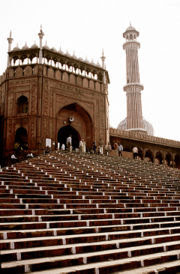
One of the most famous landmarks of Old Delhi is the Jama Masjid – a beautiful mosque built by Shahjahan in the 16th century, its azaans going out even today to call the faithful to prayer. It is actually Masjid -i- Jahan -Numa: “the mosque commanding a view of the world” and is popularly known as Jama Masjid referring to the Friday gathering for prayers (jum’a meaning Friday in Arabic). One of the largest mosques in Delhi, it's courtyard can accommodate 25,000 worshippers.


The beautiful steps on all three sides are made of red sandstone and it is one of the few mosques built on high ground giving it a really majestic aura.

Pics from Wikipedia – read more there.


And tucked in a bylane (see map) opposite the mosque is another veritable monument – Karim.

Karim’s present day avatar started out as a roadside dhaba (local eatery) in 1913, almost 100 years ago. But their ancestors date back to the time of Mughal emperors for whom they were the royal cooks. They used to prepare their secret family recipes in the environs of the Red Fort till the last emperor fell in 1857 after the Mutiny and they went into exile to escape the British rulers. The family lived in hiding in Lucknow till 1911, when they came back and set up their dhaba here under the aegis of Haji Karimuddin the grandfather of the current owner. There has been no looking back since – their mutton gravies and chicken kababs, delicious biryanis and earthy rotis and naans have attained global fame. Karims has found mention in BBC, Lonely Planet, Time magazine and even the National Geographic.

Today, they are a family establishment owning a chain of restaurants in and around Delhi. The most famous one though, remains the one near Jama, tucked away in the same alleyway where they originated so many centuries ago.

So I was more than happy when our dear neighbor A came up with a “Sunday breakfast at Karim’s” plan. Now I’m not much of a meat eater and mutton is a no-no anyway, what with it being difficult to digest for me, but there was no way I was going to pass up an opportunity for a foodie adventure like this!

So off we set off one chilly November morning, 3 kids in tow and met up with another couple at the Ashoka Road Metro station, where we parked our cars. We then took the Metro line and got off at Chawri Bazaar station. This was the first time I was travelling by the Metro and I was really impressed at how clean and efficient the whole system was. There is still a lot of the city left to be connected and it won’t be fully complete before 2025 but if we manage to run and maintain the network as it is envisioned, Delhi will really get less congested as more and more people start using it.


From Chawri Bazaar station we took three cycle rickshaws and made our way to Karim’s – we passed by the Jama Masjid and our eyes were automatically drawn to its high domes and slender minarets. I remember going inside when I was on a visit to Delhi with my parents at age 15 and gazing at the marble flooring in black and white.It was like travelling back in time.....the crowded streets almost empty since it was a Sunday, the old buildings reminding me of similar looking ones in the older areas of Mumbai.....cows sharing equal space with dogs and goats. After a short drive we stopped at a non descript looking street.


Karim’s now also has lodging and it was a bit confusing with many signs saying "Karim’s" all around. We entered through a narrow passage and found ourselves outside the unprepossessing restaurant – just about capable of seating 50 people at a time. Formica topped tables scrubbed clean with functional chairs to match. A cash counter which had a board above proclaiming boldly that they didn’t accept any credit card!

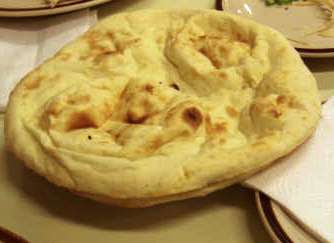
We didn’t have to wait long for two tables to be joined to accommodate us and we placed our order of rotis, sheermal, paya and nihari – the only items on the menu at that time of the day. The rotis are these huge, soft, almost fluffy yet slightly crisp rounds of flatbread, made with flour and egg and baked in a traditional tandoor (clay oven).


Sheermal is another type of flat bread which is made with milk and sugar, leaving it ever so soft and slightly sweet and tinged with a caramel brown colour. It was simply delicious and one could keep eating those circles with the waffle like tiny square impressions, without a break.


Payaa is goat or lamb trotters cooked to perfection over several hours and served in thin spicy gravy while Nihari is a stew made from beef or lamb, the pieces being traditionally prepared with spices and then cooked overnight or for 6-8 hours till really soft and tender. Nihari is now very popular in Pakistan where it was taken by the Delhi Muslims and is also known as a breakfast curry; a delicacy once enjoyed only by the upper echelons of society, for its rich taste and subtle variations.

Payaa as made in the South is very different; either in a tamarind based gravy or in a coconut based gravy. Here it was spicier (which surprised me) and also had more of the rich mutton flavor than any overpowering spice. The Nihari was thicker and a bit creamier though I don’t think it was because of any additional fat, rather the mutton stock itself thickening and reducing as the pieces cooked in it.

The service was warm and friendly with our waiter gently prodding us on to order some more rotis to mop up the gravy and then some more gravy to finish the rotis, till everyone was so stuffed they could hardly breathe. All in all, a really great foodie experience!

I think it would be a good idea to do this kind of breakfast only once in 6 months ……but I will definitely want to come back to Old Delhi and Chandni Chowk to explore it’s other treasures.