Showing posts with label Maharashtrian. Show all posts

Monday, August 23, 2010

Kale Chanechi Amti - Black Chickpea Curry


Black Chickpeas are a regional speciality in Indian cooking - their preparation varies from one state to another. In Kerala, there is kadala curry with its distinctive coconut flavour, in Tamil Nadu, it is prepared as sundal - a lightly tempered savoury preparation of chickpeas tossed with grated coconut.

In Delhi, kala channa is a favourite accompaniment with kulchas which are sold as streetside fare. This is a popular cottage industry with the dish typically sold from the back of a bicycle - lightly baked flat breads are warmed up and served with a spicy semi-dry preparation of black chickpeas. My MIL was very taken with the idea when she visited us last year!

I have used these black chickpeas to make one of my favourite Maharashtrian dishes, amti - a spicy curry made with lentils or sprouted legumes. This reminded me a lot of Usal which is a spicy curry made with sprouts and is also used in making the popular snack misal - where the usal is mixed with other ingredients like boiled potatoes, peanuts, chopped onions, coriander, tamarind chutney, farsaan (fried snacks made out of chickpea flour) and even yoghurt to make a delicious filling snack.

I have used this recipe before for cooking black eyed beans to make chawlichi amti. For this version, I didn't sprout the chickpeas and used copra (dessicated coconut) and garlic to make a spice paste and added red chilli powder, cumin powder and coriander powder along with some tamarind pulp to the cooked chickpeas and cooked everything down to a delicious gravy. The only thing to remember for this dish is to soak the chickpeas overnight. It then has to be cooked till soft - in a pressure cooker that takes about 15 minutes and another 20 minutes of simmering with the spice paste.

This recipe is a heavily adapted version of Sanjeev Kapoor's recipe for amti made from sprouted black peas (kale watane) - but the amazing smell of coconut and garlic, mixed with the pleasure of biting into the plump chickpeas, brought back some pleasant memories.

This lovely, savoury curry goes to Susan's My Legume Love Affair #26 which is being hosted by Simona of Briciole.

(E of Evolving Tastes has kindly pointed out to me that kale watane (which is what I had called this earlier) is different from kale chane - so I have modified it accordingly)

Kale Chanechi Amti - Black Chickpea Curry

Black chickpeas (sprouted or plain) - 1 cup
Copra (Dessicated coconut) - 1/4 cup
Garlic - 5 cloves
Onions - 2 - 1 sliced, 1 finely chopped

Chilli pd - 2 tsp
Coriander pd - 1 tsp
Cumin pd - 1 tsp
Turmeric powder - 1/2 tsp
Hing - pinch
Tamarind - marble sized dissolved in 1/2 cup of water
oil - 2tsp
salt to taste
coriander leaves - 2 tbsp

1. Slice one onion and finely chop the other onion.
2. Heat 1 tsp oil and saute the sliced onions for 3-4 minutes, add the dessicated coconut and garlic cloves and roast for another 2-3 minutes. Cool and grind to a paste.
3. Heat 1 tsp of oil in a pan, add asafoetida and finely chopped onions; fry for 3-4 minutes.
4. Add the turmeric powder, chilli powder, coriander powder and cumin powder and fry well for 3 minutes.
5. Add the boiled chickpeas, salt and 2 cups of water and bring to a boil. Simmer, covered, on low for another 10 minutes.
6. Add the coconut-garlic-onion paste, tamarind paste and simmer for another 10 minutes.
7. Add coriander leaves for garnish and remove from flame.

Sig of Live to Eat has a giveaway on her blog - so if you want to win some goodies, take a peek!

Sunday, June 6, 2010

The End of an era or Evolution?

Last Sunday's Brunch (a weekly supplement with the Hindustan Times) had a piece by Vir Sanghvi on his column Rude Food, which touched on a topic close to my heart. He writes, that with the evolution of families into nuclear units and the fact that its common for both partners to be working now, home cooking and therefore local cuisine may be dying. After a hard day's work when one comes home, there are the options of ready-to-eat food as well as takeout available now in most urban areas so in a matter of minutes you have food on the table - why bother making amti or cholar dal the exact way it was made by your mother's side of the family, when you have a generic "yellow dal" available at the neighbourhood take out?

So, Sanghvi says, we have young couples today who eat food which is very different from what they grew up eating, when their mothers or grandmothers had the time to cook traditional meals or the families had cooks and help to turn out elaborate meals. When they entertain, they tend to make more international food in keeping with the times. This he bemoans, is the end of home cooking and local eating habits as we know it.

I too feel that regional cuisine habits are important to preserve however, I don't think that traditional family cuisine will die such an early death as he predicts - what is happening now is, it is evolving. Each family will still have their unique food habits, it will just be a bit different from what the previous generation had.

In my own home, growing up, we had rotis (wheat flour flat breads) for lunch everyday - very different from what my mother grew up eating in Chennai, but so much more convenient to take to work in Mumbai when we were short on time. My dad on the other hand, was used to having rotis since he had moved to Mumbai right after he graduated and before that lived in Delhi with his father. So, in a way the process of moving away from traditional South Indian meals dominated by rice had already begun in his time itself. We did have rice for dinner with traditional dishes like sambar, rasam, thogayal, poriyals - but idli and dosais (rice and lentil pancakes) were only for the weekends while the rest of the days we had bread, poha (beaten rice tempered with onions, potato and spices), upma (semolina savory pudding) etc for breakfast.


My mother experimented with the North Indian dishes we had at restaurants - so there was malai kofta, paalk paneer, chana masala, rajma and kadhi made at regular intervals. Dals with different temperings became a staple and Bombay chaat was a hot favourite too.


She never gave up making her childhood favourites though - she used to wax eloquent on the meals she had in the first 20 years of her life, growing up in a village for the first 10 and then living with her grandmother in Chennai for the next 10. Some of the dishes used ingredients which were not even available in Mumbai and we could only wonder at how they would have tasted. Sometimes she would find ingredients like fresh berries (as opposed to the sun dried berries one uses in sundakkai vathal kozhambu) or drumstick greens or other types of greens which were normally not available and would be so excited about it, that we but naturally ended up sharing her passion. Our love for bitter gourd for example, is very much because of her and the fact that she used to make it in some very specific dishes which, according to her, brought out its true flavour (I know,I know, some of you are going "huh? what flavour?-you mean that horrible, bitter taste?")

Some days (Saturday afternoons especially), she used to cook traditional Tamilian dishes like keerai masiyal or poritcha kootu (a lentil preparation made from split mung bean lentils tempered with a coconut based masala), mix it in with soft, fluffy steamed rice into a big bowl, garnish with a spoon of ghee and then make small balls of it and put it into our outstretched hands to pop into our mouths. Then would come rasam saadam (lentil and tamarind based soup mixed with rice) and then thayir saadam (yoghurt with rice) - all with a piece of vegetable stir fry in the centre of the ball. As we talked, we would eventually have almost twice the amount we normally did!


Which brings us to my cooking now - I laugh when my mother says she finds it strange how I cook some dishes in a way which is just not "our" way. Like the bitter gourd in our house;besides the tamarind and lentil based pitlai and dry stir fry which are Tamilian dishes, we also love to have it cooked as a Mezhukkuppuratti, a stir fry preparation from Kerala - specifically this recipe from Sig. I guess what she means is that changing food habits is fine as long as we are eating a completely different cuisine from ours, but sambar and rasam should ideally be paired with a poriyal or a varuval!


And so food habits have changed some more for the next generation - we eat rotis for lunch with mostly North India dishes like rajma, chana, lentils, spinach, dry preparations of vegetables like okra, cauliflower, potatoes, cabbage, gourds, pumpkin etc. Rotis for dinner too, twice a week atleast, simply because we tend to eat larger quantities of food when we have rice and would like to avoid that. Other days we have a soup and salad or pasta or grilled chicken or fish or stir fried noodles or even something like couscous on occasion - very different from what we ate growing up (atleast on a regular basis).

But that does not mean we have forgotten our traditional cuisine - we still eat sambar and rasam atleast once a week; idli, dosai, adai, semiya upma and idiyappam are regularly eaten for breakfast. Kozhambu, poriyal, thogayal (lentil/coconut based thick chutney), avial, kootu and kurma in all their variations make their appearance by rotation for lunch or dinner - especially on the weekends. Yes, I do have T now, who helps me and does a lot of our day to day cooking and that makes it easier; but I didn't have any help in the kitchen for a long time and used to make all of these dishes even at that time. After coming to Delhi especially, South Indian food was something I made myself for a couple of years (and still do for many dishes) because it was something completely new to T.


I like to cook though and I know that makes a difference - my mom herself was not (and even now isn't) someone who really loves to cook; the fact that my Dad is a real foodie and loved to have variety and good food, was one of the reasons that prompted her to go the extra mile inspite of having a full time job. And today with the commuting involved plus travelling on work etc, it does get difficult - and all said and done, it is considered the woman's responsibility in most homes to take care of getting food on the table - right from shopping for groceries and vegetables to planning meals to making it. If one doesn't like cooking that much to start with, I can very well appreciate the resentment at having to spend so much time on these activities when one could be doing so many other things one actually enjoyed.

The other reason why Mom spent time and energy planning a mix of interesting meals is because she wanted to make sure we were eating healthy - nutrition was a big issue with her and she used to go on ad nauseam about the protein and vitamin content of different food items and how important they all were for a healthy body. It seems to have registered at some level because I find myself doing the same - green vegetables are always there in some form or the other everyday, followed by dals and fruit and balanced out with carbs - preferably complex, given our current knowledge on the dangers of eating simple carbs in excess.

So, while it is easy to make use of the ready-to-eat and take out options available, in the long run I think it is worth spending some time to ensure that healthy eating becomes part of our lifestyle. Not just in fits and start when we get onto some new fangled diet every 6 months which then lasts for exactly 6 days because we can't sustain eating just fruits or raw vegetables (or whatever these diets prescribe) for every meal.

With a little bit of planning, one *can* manage to eat healthy without resorting to processed food or take-out all the time. I have done it and I see a lot of my friends doing it too - especially those who live outside India and have absolutely no help on hand. Simple things like prepping food on weekends (pureeing tomatoes, chopping onions, boiling vegetables, marinating meats, sprouting beans) can help save time in putting together dinners on weekdays. Also, we can now make use of some of the innovations in food processing technology which can make cooking Indian food that much easier. Ginger garlic paste for e.g., packaged coconut milk, dessicated coconut powder, spice powders, dried herbs, tamarind paste, frozen peas - all of these can save a lot of time and effort.

While cooking as well, a little bit of organisation goes a long way - I like to think of it as sequencing tasks in a way that you spend as little time in the kitchen as possible. Some tips which help me:


1.Soak lentils a little ahead of time a little ahead of time (or even overnight) to speed up the cooking process.
2. Put the lentils (dal) into the pressure cooker as the first step - by the time you prep for the other dishes, the dal would be cooked and ready to be tempered.
3. While it may seem easier to finish chopping all the vegetables at one go before you start
cooking, its a better idea to chop the first vegetable which needs to be cooked before the others (usually onions and tomatoes) and while they are being sauteed you can continue with chopping the other vegetables.
4. Try to make sure all burners on the stove are in use for maximum time utilisation - I try to do this by cooking the dal (or vegetables or pasta) on one burner, sauteeing the onions/tomatoes on another burner and roasting spices/tempering/boiling milk on the third.
5. Similarly, I try to use my oven to the maximum too - sticky potatoes (arvi) for e.g. After boiling and tossing it with spices, I just roast them in the oven since cooking them on the stove needs a lot of supervision to prevent them from sticking to the bottom as well as frees up one burner for other things.
6. Set yoghurt, fill bottles and ice trays, knead the chapati dough and clean the fridge while you are waiting for something to cool or cook in the kitchen.
7. Prep for the evening meal while cooking in the morning - cook some extra dal for the evening meal with rotis, puree tomatoes for pasta sauce, or cook rice and cool to use in a fried rice for dinner.
8. Similarly, prep for the lunch box for the next day while cooking dinner - cook and cool rice for a mixed rice preparation like tomato rice or tamarind rice. Or make a vegetable curry dish in a pressure pan (from tempering to cooking) and cool before refrigerating for the next day.
9. In a notebook, make a permanent list of all the kitchen ingredients as well as grocery items (like soap, washing powder etc) used in the house. While I am waiting for something to cook, I go through the list and write down the items I need to replenish (which I would have noticed while cooking or cleaning) on a flexible, white board magnetic strip attached to the refrigerator - I keep adding to it through the week. On the weekend, I just pop the white board strip into my bag and use it for my weekly grocery shopping trip to the supermarket.

As Sanghvi points out in his article, it *is* harder now to get cooks and more expensive too (and he also says that some people consider it politically incorrect to have help around!!); but I think it is easier to find someone to come in for an hour or so in the mornings and help with kneading the dough, cleaning greens, chopping vegetables and other work like this which makes the actual task of cooking that much easier.

While I do agree with Vir Sanghvi that home cooked cuisine, which reflects subtle changes between regions and even from family to family, can be lost with the current trend of people taking to ready-to-eat packs and restaurant take-out food, I think what is more important to consider is that it is these trends which are slowly raising obesity levels all over the world and making conditions like diabetic commonplace. We are the only ones responsible for our health and if we do not take care to consider what we are eating, we will do our bodies a lot more harm than we can foresee.

And for those of us who have children - they learn by example; while it would be great if we could preserve traditions and food habits by cooking the food we grew up eating, it is even more important for them to learnt that it is not that difficult to cook from scratch on a regular basis. If they see the adults around them making informed choices right from the buying to cooking, they usually tend to absorb those things unconsciously and make better decisions when the time comes for them to make the same choices. They will learn to pick and choose the kind of processed food they buy if they know that a lot of them contain high quantities of sugar, salt and fat.

Regional cooking is also important because it usually uses vegetables which are locally available; I do use zucchini and cherry tomatoes sometimes for a roasted salad, but its the courgettes (tindas),raw bananas, ridge gourds (tori/peerkangai), parwal and tendli which are always on my list - the fact that they are locally sourced makes them cheaper as well.

There are people who have even forgotten how these vegetables are cooked traditionally or even if they do, don't cook it because their regular diet now consists of roast chicken, pasta and grills and it is vegetables like babycorn, mushrooms, cauliflower, green beans and carrots which are served on the side.

Nothing wrong with that - but I do believe that by omitting local vegetables which are in season, we are missing out a lot nutritionally as well as some of their medicinal properties which are highly relevant in the Indian context.

Gourds like bottle gourd (lauki/dudhi/sorakkai), ridge gourd, snake gourd(podalangai/padwal) etc are recommended for the summer season because of their higher water content which makes it easy to digest in the heat; ivy gourd (tendli/tindora/kovakkai) has been proved to help in preventing diabetes while bitter gourd (bitter melon/karela/pavakkai) has been shown to increase insulin sensitivity and lower elevated blood sugar levels. Also, eating a number of vegetables helps to bring variety to the table as well as helps avoid eating vegetables which are out of season at ridiculously higher prices.


We have several kinds of greens in India - methi (fenugreek), suva (dill), sarson (mustard greens), khatta paalak, haak, molai keerai/arai keerai/siru keerai(all amaranth varieties), murunga keerai(drumstick leaves),agathi keerai, poonaganni keerai, pulichai keerai, manathakali keerai and most regions have a different kind of preparation for each kind - get to know these before its too late and you stop eating them completely. These are calcium rich sources of food and, again, bring variety to the table. Many regional cuisines in India combine greens with fish, chicken or meat - a perfect way for a complete meal.

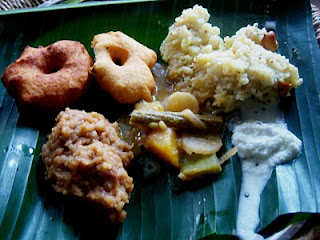
Our festivals are another occasion to make a bit of an effort when we have a little more time on our hands (if we haven't already left town for a three day weekend!) to recreate some of the meals and sweets that we have enjoyed in our childhood. Onam sadya, Pongal sapaadu, Naba Barsha mishti - all different ways of enjoying some delicious (and at times maybe not-so-healthy) regional delicacies. Even if we can't make them at home, maybe those are the times to go out and indulge in a lip smacking thali at a speciality restaurant.

So what are your thoughts on this subject - "much ado about nothing? Its food after all!" - would love to hear your comments.

What are the time saving techniques you use to make cooking a little easier and less of a chore? I know you have a lot of ideas - do share them here with us.

Monday, February 22, 2010

Sugar Sugar....

I have been making bi-annual research trips to Kolhapur for the last two years and it has been a fascinating experience. The fact that I was born and brought up in Maharashtra (Mumbai) and am familiar with the culture and know the language, definitely helps. My brother also studied in Warana and I distinctly remember the hostel exploits he used to regale me with - seemed daring for my naive 12 year old self then, but actually quite tame as compared to the standards today's youth are setting.

Kolhapur is a town whose history can be traced back to the 9th century (and there have been excavations found which date to as far back as the First century BC). It is now quite prosperous - it reportedly is one of the towns with the highest sales of Mercedes cars in the country and we saw showrooms selling top end bikes costing more than a lakh of rupees (USD 2000) as also these "buggies" which are apparently bought for kids to drive around the "farmhouse" - price? another lakh of rupees. The wealth is mostly fuelled by the sugarcane industry - a co-operative industry (if you can call it that)which provides the cashflow as well as votes to many a successful politician from this region.

But other than the material wealth, there is also the richness of culture which this corner of south-west Maharashtra is steeped in. The Mahalakshmi temple is one of the famous landmarks - the legend goes that the Goddess vanquished the demon king Kolasur - and as his dying wish, the city was named after him. More than the temple, I love poking around those small shops around its periphery - the ones where you get those typical green bangles, the lovely vermillion powder (kumkum), small religious knick knacks -silver crowns for idols, tiny silk "sarees" in red, green and gold for the goddess in your home - , flowers and what not.

The people are warm and hospitable to a fault. Apart from the Kolhapuri chappals (hand stitched leather thongs) and Kolhapuri mirchi (chillies) which everyone usually hears of - Kolhapuri cuisine is quite distinct. Their tambda rassa (red curry with goat meat) and pandhra rassa (white mutton stock soup) are signature dishes of Kolhapur along with the sukka mutton (stir fried goat meat). Not being a fan of red meat (I find it far too difficult to digest) what I really enjoy in this part of the country is the simple Maharashtrian vegetarian fare - moogachi usal (whole green gram sauted with spices and coconut), amti, varan bhaat, bhakri (sorghum flour flat bread) and sol kadi (a tangy,mildly spiced drink made from coconut milk and kokum fruit extract). Then there's the snacks which beckon - wada pav, misal...


But what intrigued me most this trip is coming across huge green houses - 57 acres of horticultural operations run right next to a sugar mill by the second generation scion. They grow flowers for the export market as well as the domestic market and with huge investments and lot of technology have managed to make this a lucrative business while diversifying from the cyclical sugar industry. It also provides employment to the local population of women (who were traditonally restricted to ancilliary jobs in the sugar industry) who tend to the flowers with the requisite care and diligence. There were rows and rows of multi coloured gerberas, delicatedly shaded roses and the most exquisite orchids - the profusion of flowers dazzled our senses.


I marvelled at the sense of enterprise which fuels this part of the country - even the farmers here seem to be so much better informed than their counterparts in the North. While the cane production deficit is fuelling a steep rise in prices, it makes sense that the farmer should think of shifting to alternatives which will provide a better income to him - this is indeed a different way of thinking from the traditional mindset of cane being a "lazy" crop which requires hardly any tending and no need for marketing the produce which is all bought up by the co-operative at pre -fixed prices.

I will leave you with this picture of some wonderful strawberries which I found on the lane outside the Mahalakshmi temple while buying kandi peda (milk based sweet), bhadang (spiced puffed rice) and pohe chivda(spiced beaten rice) - sweets and snacks which are some of my childhood favourites!

Thursday, February 5, 2009

Amti - Ruchira style

Another version of one of my favourite dishes - I have waxed eloquent on the joys of simple, Maharashtrian home cooking and for those who wonder what all the fuss is about, do try this once. Amti, in all its lentil cloaked goodness is at once comforting and delicious. Maybe it's my sambar craving South Indian roots, maybe its my Mumbai upbringing eating varan bhath at my neighbour's house - whatever it is - I loove amti!

Ruchira - the cookbook, as I have mentioned in this post, is very inspiring to the cook who has experimented and just wants to come back to some good 'ol home cooking! So, I had to try this version of amti when I picked up the book - and I wasn't disappointed.

The flavours were absolutely amazing - simple, clean yet carrying that indescribable aroma of goda masala mixed with tamarind. Perfect with some hot polis or even just rice and bhindi bhaji (okra stir fry). Goda masala is usually home made in Maharashtrian households but Bedekar and some other local brands in Mumbai make a decent mix too.

This dish goes to this month's edition of Monthly Mingle - Healthy Family Dinners - being hosted by Michelle of What's Cooking. Monthly Mingle is originally the brainchild of Meeta of the amazing blog What's for Lunch Honey.

Toor Dal Amti

adapted from Ruchira by Kamlabai Ogale

Toor dal - 3/4 cup (split pigeon peas)
Marble sized piece of tamarind soaked in 5 tbsp of water
1 tsp chilli powder
1 1/2 tsp goda masala
1/2 tsp grated jaggery

Tempering:
Mustard seeds - 1/4 tsp
Asafoetida - pinch
1/2 tsp turmeric powder
1 tsp oil
8-10 curry leaves

Garnish
grated fresh coconut
Chopped fresh coriander leaves

1. Cook the dal in plenty of water in a pressure cooker till soft. Whisk the dal a bit.
2. Heat the oil in a pan and add the mustard, when they splutter add the green chilli, curry leaves, asafoetida and turmeric powder.
3. Add the cooked dal, the jaggery, salt, goda masala and the tamarind juice. Bring to a boil and reduce flame and simmer for 10 minutes.
4. Add the grated coconut and coriander leaves and remove from flame.


Thursday, January 1, 2009

Vangi Bhaji (Eggplant cooked with spices and coconut)


I have often talked of my love for Maharashtrian food. Though the fare is simple and healthy, it never fails to please my palate. The minimal use of fat and spices allow the flavours of the ingredients themselves to come through without being overwhelmed.
Case in point - Shrikhand - hung curd flavoured with cardamom to make a really refreshingly, tangy dessert. Or Amti - made out of lentils which are eaten in other parts of India as well, but just a variation with tamarind / tempering / Goda masala /coconut makes all the difference.

Food blogging has allowed me to rediscover many of the favourites I grew up eating at my neighbour's house or even at home,when my mother tried replicating dishes she had tried outside. Not only are some of my favourite food bloggers Maharashtrians, but there have also been the food blogging events which brought so many regional dishes into the limelight.

So then, it was a matter of time before I heard of Ruchira - one of the earliest Marathi cookbooks written by Kamalabai Ogale and published when she was sixty. It is apparently in two parts and the more I read about how indispensable it was for a young bride's trousseau, the more it reminded me of Meenakshi Ammal's Samaithu Paar - the first Tamil cookbook which was equally cherished by a whole generation of young brides.

Like Samaithu Paar, Ruchira has also been translated into English - albeit in an abridged form. People seem to agree that many nuances of the original may have been lost in translation. But when I came across a copy of the English version, I had to grab it! The recipes are all simple and most of them are not more than a page long with about 10 ingredients - tops!. There are some places where some ingredients have been missed out and some measures are not very precise, but nothing which a cook with basic knowledge will not be able to assume correctly.

So, the immediate Sunday after I acquired this little gem of a book I tried out the amti and vange bhaji for lunch. Vangi means eggplant in Marathi and this particular recipe was simplicity personified. Onions, a couple of spice powders. a dash of tamarind juice and coconut to round it off. Perfect morsels of crunchy coconut covered slices of soft,spicy eggplant - delicious!

Vangi Bhaji (Eggplant cooked with spices and coconut)
Adapted from Ruchira by Kamlabai Ogale

Ingredients:

Brinjal (eggplant) - 1/2 kg small,tender brinjal
Chilli powder - 2 tsp
Jaggery - 1 tbsp grated
Fresh coconut - 1/2 cup
Goda masala - 3 tsp
Peanut powder - 1/4 cup
Tamarind extract - 1 tbsp
Oil - 1 tbsp

Tempering:
Mustard seeds - 1 tsp
Asafoetida (hing) - pinch
Turmeric powder - 1/4 tsp

1. Cut the brinjal into 4 pieces in lengthwise and immerse in salted water.
2. Meanwhile, heat the oil in a pan and add the mustard seeds, when they sputter add the hing and the turmeric powder.
3. Lower the flame and add the brinjal pieces. Fry on high for 5 minutes, then cook covered with a sprinkling of water if needed for about 10-12 minutes till tender.
4. Add the chilli powder, goda masala, salt, jaggery and tamarind juice and cook till soft but not mushy.
5. Add the coconut and the peanut powder, stir and remove from flame.


Sunday, July 13, 2008

Amti (Daal - Maharashtrian style)


I have mentioned before how Amti was one of my favourites while growing up in Mumbai. This midly flavoured lentil dish is so simple but at the same time so satisfying! And ever since I got my hands on some Goda masala, it's been wonderful to be able to make this at home and have a delightful variations to all the dals and parrupu kootus we make at home.

This time I made Chincha-goola-chi Amti (Daal with tamarind and jaggery) borrowing the Cooker's recipe.

Have you visited the Cooker's delightful blog? - simple and satisfying is what it is, just like the amti I made. I guarantee you that any recipe you would pick up would not have more than 5-8 ingredients at the most, and definitely not more than 10! I tried her cupcakes for my daughter's birthday and they were perfect in everyway.


So what better place to choose from than her blog for this month's edition of MBP (Monthly Blog Patrol) where the theme is Less is More. MBP was started by Coffee of Spice Cafe and July's MBP is being hosted by Nupur of One Hot Stove. Nupur has specified that the theme means that the recipes chosen must have only five ingredients or less.


Check here for this recipe from the Cooker which has just the minimum number of ingredients with maximum taste!. The tamarind and jaggery give a distinctive taste to this dish while goda masala leaves you wondering what the smoky flavour is....

Wednesday, April 23, 2008

Kataachi Aamti - Spiced Lentil Stock Soup


Growing up in Mumbai and spending a lot of time in my neighbour's house meant that I was eating more of poli thup, varan bhath, usal and shikran more than idli and sambar! And though I resolutely refused to have rasam at home (didn't take a liking to it till much later in life) I used to love the aamti Patankar Aunty used to make.

Aamti is a staple of Maharashtrian cuisine and while it can also refer to other gravy dishes, it usually describes a lentil preparation with a wonderful mixture of spicy, sweet and sour notes. I loved the consistency - not as thick as sambar and not as thin as rasam - just perfect to be eaten with steamed rice or chapattis.

The tempering, the dals used, the spice mix, the proportion of jaggery and kokum or tamarind - all this produced a lot of variations of aamti. Different regions and different families have different recipes just like we have different types of sambar all over South India. Read more on Nupur's wonderful A-Z series

I of course didn't know much about the different kinds of aamti at that age. It was only much later when I started cooking, that I naturally tried making many of these recipes which were a big part of my childhood memories (and which of course you didn't get in restaurants unless you were sitting in one of those small eateries in B.B Dadar or Parel!).

One of the recipes I came across was Kataachi Aamti - a dish made from the lentil stock in which the chana dal, used in filling Puran Polis, was cooked. Puran Polis are another much loved Maharashtrian delicacy - deliciously sweet flaky stuffed flat breads - see one yummy version complete with pictorial here

My first Tamil New Year in Chennai after marriage saw me really homesick for Mumbai and since we anyway make "sweet bolis" as a festival dish I decided to make it the Maharashtrian way. The difference being that we use maida for the "bolis" and a coconut and jaggery filling while puran polis use wheat flour and a much drier chana dal and jaggery/sugar filling.That was the first time I made Kataachi Aamti, using a recipe I found in Femina.

I have made it many times after that, but without the puran poli bit....
This light soupy dish is perfect for the summer and you don't have to make puran poli to make the aamti! Just use the chana dal for some other preparation like a kootu or a tempered dal.

I am sending this dish to the April edition of Think Spice. This wonderful series which was begun by Sunita of Sunita's World has covered spices like mustard, ginger, saffron and star anise over the past six months and introduced us to a veritable feast of recipes showcasing the star spice of the month and its unique properties.
Sunita has now graciously extended this series to the rest of the food blogging world and from this month onwards Think Spice will be guest hosted by other food blogs. Gretchen of Canela & Comino hosts Think Spice - Cloves this month all the way from Peru!

My earliest memories of clove are not from food but seeing my Dad sucking on some clove after a rich meal to freshen up his mouth and my brother being asked to suck on a clove to tide over a toothache till he could get to the dentist the next day.

This aromatic spice (among others like pepper, cardamom and cinnamon) has been a precious commodity since time immemorial - wars have been fought, countries annexed and monopolies created for this spice which was worth its weight in gold! It has penetrated different global cuisines today and is easily available - but what you may not know is that besides its culinary uses it has so many other properties - antiseptic, analgesic, antispasmodic and even anaesthetic!

Clove imparts a very distinctive flavour to this dish and is a perfect example at the way it makes itself at home in almost all cuisines across India.

Kataachi Amti


Ingredients:

5-6 cups (1.2 litres) of chana dal stock
(cook about 2 cups of chana dal in 8-10 cups of water till it is soft, drain water and use for this recipe; the cooked chana dal is usually used to make the filling for puran polis but you can also temper it to make a dal accompaniment or add vegetables like cabbage, chow chow or bottle gourd (ghiya/sorakai/dudhi) to make a more substantial accompaniment.

Tamarind (imli) - lemon size ball soaked in 1 cup water
Sprouts - 1/2 cup (the original recipe called for 2 drumsticks cut into 1 " pieces)
Crushed jaggery (gur/vellam) - 2 tbsp
Dry coconut sliced (copra) - 1/4 cup
Cumin seeds (jeera)- 1 tsp
Chilli powder - 2 tsp
Goda masala - 1 tsp ( a Maharashtrian spice mix)
Salt to taste

Tempering:
Oil - 2 tsp
Cloves (lavang) - 5
Cinnamon - 1 " piece
Cumin seeds (jeera) - 1/2 tsp
Mustard seeds (rai) - 1/2 tsp
Curry leaves - 6-7


Method:

1. Extract tamarind juice and add to the dal water. Heat the dal water in a kadai(wok) and bring to a boil. Add sprouts and boil for 3-4 minutes till half cooked.

2. In another pan, roast cumin seeds and dry coconut for about 4-5 minutes on a low flame, cool and grind to a fine paste.

3. Add chilli powder, salt and jaggery to the dal water and boil for 3 more minutes. Add the cumin coconut paste and goda masala and simmer for another 4-5 minutes.

4. Heat oil for tempering in a small pan and add the mustard seeds, when they pop season with cloves, cinnamon, cumin seeds and curry leaves. Pour the seasoning over the simmering aamti and turn off heat.

5. Serve hot with steamed rice , chappatis or puran polis. The consistency is very watery as compared to most other lentil dishes and is very conducive to slurping right from the wati (bowl) in which it is served!!