
 Posts
Posts


One of the recipes I learnt from my MIL was one which was prepared, not in her maternal Mudaliar home, but by her MIL who was from Thanjavur. The base recipe for the masala was used with some other vegetables like raw banana and yam, but I liked it best when it was made with snake gourd.
Snake gourd otherwise has limited preparations that I know of, the bland poriyal category – for which I feel it isn’t crunchy enough; the chana dal kootu or dal – where it usually completely loses its character and merges with the soft lentils- and the stuffed version which is quite time consuming.
This preparation allows the snake gourd to retain it colour and at the same time spices it up with the aniseed flavoured masala. Traditionally it is a dry accompaniment to the sambar/kozhambu, rasam meal, but I have found that it also pairs well with chapattis and my husband loves carrying it in his lunch box.
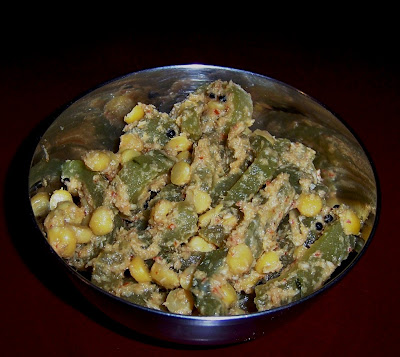
Ingredients:
Snake Gourd – ½ kg
Chana Dal (Split Bengal Gram) – ½ cup (soaked for 1 hour)
Masala:
Dried red chillies – 4
Aniseed (Saunf) – 1 tbsp
Grated coconut – ¼ cup
Salt – to taste
Tempering:
Oil – 1 tbsp
Mustard – 1tsp
Curry leaves – 5-6
Method:
1. Wash and peel the snake gourd, then slice it vertically into half. Remove pith and seeds and cut into semi circles horizontally.
2. Cook the chana dal in water till just tender, it should not get overcooked and mushy. You can cook this on the stove top or in a pressure cooker for just one whistle. Ideally, it should still have a little bite to it so that it can cook some more with the masala and the snake gourd.
3. Grind the masala ingredients to a paste adding a little water adding as little water as possible.
4. Heat oil in a kadai/wok; when hot add mustard seeds and when they pop add the curry leaves.
5. Add the chopped snake gourd and stir fry for 3 minutes on high. Then reduce flame, add the masala and fry for 3 minutes more.
6. Add salt and ½ cup of water or just enough to cover the snake gourd, cover and cook on low for 3-4 minutes till the snake gourd is half cooked.
7. Add the cooked chana dal to the half cooked snake gourd, adjust salt and then cook for another 5 minutes till the snake gourd is fully cooked and the masala becomes dry and chana dal is soft and mixes well with the vegetable and masala. Add a splash of water if needed.If there is excess water; increase the heat so that it dries up.
Note: The chana dal shouldn’t get mashed, so if it is already very soft after cooking, then it should be added right at the end to the vegetable and not stirred too much, so that it remains whole and doesn't fall apart.
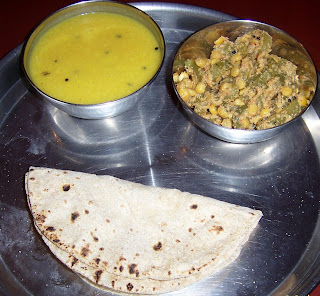


Snake gourd otherwise has limited preparations that I know of, the bland poriyal category – for which I feel it isn’t crunchy enough; the chana dal kootu or dal – where it usually completely loses its character and merges with the soft lentils- and the stuffed version which is quite time consuming.
This preparation allows the snake gourd to retain it colour and at the same time spices it up with the aniseed flavoured masala. Traditionally it is a dry accompaniment to the sambar/kozhambu, rasam meal, but I have found that it also pairs well with chapattis and my husband loves carrying it in his lunch box.
The chana dal to snake gourd proportion can be adjusted according to one’s preference, I prefer more snake gourd to chana dal so that the spiciness isn’t dulled by the dal.
Podalangai Masala (Snake Gourd & Lentil Vegetable)
Ingredients:
Snake Gourd – ½ kg
Chana Dal (Split Bengal Gram) – ½ cup (soaked for 1 hour)
Masala:
Dried red chillies – 4
Aniseed (Saunf) – 1 tbsp
Grated coconut – ¼ cup
Salt – to taste
Tempering:
Oil – 1 tbsp
Mustard – 1tsp
Curry leaves – 5-6
Method:
1. Wash and peel the snake gourd, then slice it vertically into half. Remove pith and seeds and cut into semi circles horizontally.
2. Cook the chana dal in water till just tender, it should not get overcooked and mushy. You can cook this on the stove top or in a pressure cooker for just one whistle. Ideally, it should still have a little bite to it so that it can cook some more with the masala and the snake gourd.
3. Grind the masala ingredients to a paste adding a little water adding as little water as possible.
4. Heat oil in a kadai/wok; when hot add mustard seeds and when they pop add the curry leaves.
5. Add the chopped snake gourd and stir fry for 3 minutes on high. Then reduce flame, add the masala and fry for 3 minutes more.
6. Add salt and ½ cup of water or just enough to cover the snake gourd, cover and cook on low for 3-4 minutes till the snake gourd is half cooked.
7. Add the cooked chana dal to the half cooked snake gourd, adjust salt and then cook for another 5 minutes till the snake gourd is fully cooked and the masala becomes dry and chana dal is soft and mixes well with the vegetable and masala. Add a splash of water if needed.If there is excess water; increase the heat so that it dries up.
Note: The chana dal shouldn’t get mashed, so if it is already very soft after cooking, then it should be added right at the end to the vegetable and not stirred too much, so that it remains whole and doesn't fall apart.
Phulkas, Masur Dal and Podalangai masala
Edited to add: Some people asked me about snake gourd and how it looks etc, so I am posting a pic of the one half I had left, unpeeled and the insides too.


