Tuesday, November 13, 2007

No wonder chocolate is so addictive!


It started out as an alcoholic drink 3100 years ago!
Researchers testing residues in pottery vessels in Puerto Escondido, Honduras, dating back to 1100 BC have found traces of a chemical compound (theobromine)found exclusively in the cacao plant. This then makes it the earliest known use of cacao which is the basis of chocolate as we know it today.Before the current study, the oldest known use of cacao was marked by the discovery of a bottle containing traces of the material excavated from a grave in Colha in northern Belize. The bottle dated to 600 BC.
Image from here
news.au.com reports "The earliest cacao beverages consumed at Puerto Escondido were likely produced by fermenting the sweet pulp surrounding the seeds," the scientists wrote in the journal Proceedings of the National Academy of Sciences.One of the researchers, anthropologist John Henderson, of Cornell University in Ithaca, New York, said "What we're seeing in this early village is a very early stage in which serving cacao at fancy occasions is one of the strategies that upwardly mobile families are using to establish themselves, to accumulate social prestige,"
Read more here
So, a chocolate based alcoholic drink served as a status symbol - doesn't sound that far fetched does it? A small group of people in the upper echelons, enjoying a commodity and appreciating it's "value" and denying access to the hoi polloi so that it gains all the more snob value. Well, we sure inherited those genes!
That article also goes on to say that, the style of the 10 small, elegant serving vessels suggested the cacao brew was served at important ceremonies perhaps to celebrate weddings and births. Classy!

Image credit: PNAS/National Academy of Sciences; pottery vessel from Honduras similar to the ones in which scientists found the earliest known evidence of the use of the cacao tree.

The chocolate beverage which was consumed by the Mayan and Aztec civilizations may then have come later, maybe as a by product of the brewing process - or even by accident. And even later,the Spanish conquerors (after decimating a whole civilization) brought cacao to Europe in the 16th century after which it evolved over the centuries into its present day form.

The researchers say that they are being conservative and further studies might even prove that they date upto a couple of centuries earlier.

Well, for those of you who drink, have you ever liked chocolate flavoured alcoholic drinks? I usually steer clear of any drink which has things like vanilla ice cream, pineapple,strawberry and other sweet stuff! But I know plenty of people who adore these cocktails and so obviously there must be some of you who would like, for instance, chocolate martinis?! If so, you are keeping up an ancient tradition! Cheers!

Salsa

I discovered the magic of Salsa in Chennai of all the places - in the one and only Tex Mex restaurant it has, courtesy the restaurateur Mahadevan. This former professor turned entrepreneur is credited with introducing global cuisine to Chennai in the 90’s when not many people ate out in the first place, let alone try new cuisines.

And almost every one of his restaurants turned out to be a huge success. Including Don Pepe’s Tex Mex which is located on R K Salai (Cathedral Road) surrounded by his other success stories – Hot Breads ( a bakery chain ) and Zara’s - a Spanish Tapas bar which has the distinction of serving up some delicious Tapas style snacks as well as being the only stand alone pub in Chennai worth it’s Tequila.

Well, it’s not strictly a stand alone pub I guess, since it is technically part of a hotel; which it has to be, due to some archaic rules framed to protect us innocent people from being corrupted - which we would if there were pubs dotting the horizon. But if they are tucked inside hotels which are either too shady or too expensive, than we will escape the lure of alcohol and our morality will remain intact. It’s for our own good.
Of course, I’m not sure about the people who consume 19.3 % of 119 million cases of spirits and 9% of 93 million cases of beer each year in Tamil Nadu (info from here) – couldn’t be us you know, since there aren’t any pubs around! Must be those immoral out-of-towners.

On to the salsa at Don Pepe’s – S and I used to shamelessly polish off almost the whole complimentary bowl even before the appetizers arrived! And then ask for refills for the main course. It used to be juicy, freshly made and absolutely delicious. Oh, how I miss that place after moving to Delhi…….
The bottled ones are mostly a vinegary, pureed concoction with more ketchup than tomato in them and hardly fresh. When we bought a packet of taco chips recently, I decided to make my own salsa. I’m so glad we didn’t get the bottled stuff that day in the convenience store, making this fresh was so worth it!

Note:
To the recipe below I also added one roasted red capsicum diced, which I had left over from another recipe and it took the salsa to a whole new level.

I also zapped the diced green pepper in the microwave with a tbsp of water for about a minute just to soften it since I don’t like it too raw.

Some recipes call for the salsa to be pulsed a couple of times in the processor till chunky, but I like it unprocessed.


Salsa


Ingredients:

Tomatoes – 4-5 firm, deseeded and diced (2 cups)
Sweet Corn kernels – ½ cup
Garlic – 2 tbsp minced
Jalapeño peppers – 2 deseeded and chopped

(I substituted with green chillies). You can also have a combination of Jalapeno/chipotle/habanero peppers depending on the heat level you want.

Spring Onions – white part alone, 1 cup chopped fine
Green Pepper – 1 small diced
Cumin powder – 1 tsp
Lemon juice – 2 tbsp
Olive oil – 1 tbsp
Coriander leaves – 1 cup chopped
Dried Oregano / Mixed dried herbs - 1 tbsp
Tabasco sauce – 1 tsp (optional)
Salt and pepper – to taste

Method:
1. Combine all ingredients in a bowl. Mix together and check seasoning and adjust spice.
2. Let rest for about 10-15 minutes till the flavours mingle and serve with taco chips or nachos. Or on the side with Burritos/Quesadillas/Chimichangas.

Monday, November 12, 2007

Beetroot Poriyal (Foogath)

There’s something really satisfying about porials (also called foogath), something I have been able to appreciate only in the last decade or so. The tiny chopped vegetables, sautéed in minimal oil, tempered with mustard and curry leaves, steam cooked till just tender and crunchy and then finished with a garnish of grated coconut.
Beans, carrot, cabbage, beetroot, chow chow, snake gourd – all these taste just right to me cooked this way, their colours still intact. Cabbage, in fact, I used to hate till I figured out that it was the overcooked, wilted, turmeric yellow appearance that I disliked, but loved it when it was all crisp, white and delicately flavoured. I learnt to like these veggies when Maragatham cooked for us – she was our neighbour's cook who cooked for us for about a year and she used to turn out perfectly cooked porials time after time.

I think most Indian cuisines have this in various versions - upkaris/shaak/poriyal

My daughter seems to have caught on much earlier than I did – she loves porials and will often ask for more while refusing another spoonful of rice – I happily give in.

The other day,I made puli kozhambu and cooked beetroot porial to go with it. I have always thought of porials as being the perfect foil to fiery kozhambus, sort of balancing the spice and sourness with their nutty flavor.


Beetroot porial


Ingredients:

Beetroot – ¼ kg
Mustard – 1 tsp
Chana dal - ½ tsp
Urad dal – ½ tsp
Curry leaves – 5-6
Green chillies - 2
Salt to taste
Oil – 1 tsp
Grated coconut – 2 tbsp

Method:
1. Wash beetroot, peel and chop finely.
2. Heat oil in a kadal, add the mustard seeds, when they begin to pop, reduce the flame and add the green chillies, chana dal and urad dal and wait till they brown a bit – ½ minute. Add the curry leaves and stir.
3. Add the chopped beetroot and salt and mix well on high for 1 minute, reduce flame, sprinkle 2 tbsp water, cover and cook on low for 4 minutes. Remove lid, check if cooked, sprinkle some more water if not and cover and cook for another 2-3 minutes till just tender.
4. Add grated coconut just before removing from fire.


Note: The key to a good porial is to make sure the vegetables retain their colour and texture and are not overcooked. Less oil and steam cooking helps in this, as does cutting them finely so that they cook faster and more evenly.

Friday, November 9, 2007

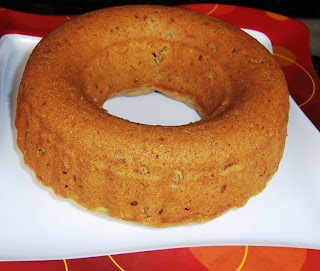
Walnut & Ginger Bite Ring

One of my close friends gifted me the Baby & Toddler cookbook by Tarla Dalal, just prior to the arrival of our daughter. I dug out this cookbook a good six months later,when I started weaning her off milk and into more of solids and made quite a few of the finger food recipes like cheese straws made of whole wheat flour etc since the alternatives readily available in the market (like bread sticks and Glucose biscuits ugh!) were usually made of plain flour which I wanted to avoid.
The other foods like dal,khichdi, soup and the like were our everyday food which I didn't need recipes for, and as she started eating more and more of what we were eating and I stopped cooking separate meals for her, the book lay forgotten.

While doing a spot of Diwali cleaning, I came across it lying with my other cookbooks and started leafing through it. I found this recipe for a Spiced Walnut Ring which I decided to make for a Diwali dinner we had been invited to and for which I had volunteered to get dessert. The evenings have just started turning chilly in Delhi and I thought this cake, with its spicy notes,would be apt for the occasion.

I did a fair amount of tweaking to the recipe and substituted the ginger powder (soonth) with chopped pieces of candied ginger. The spicy sweet pieces of ginger are a nice surprise when one bites into the cake.

I also cut down on the condensed milk and sugar quantities which I figured might be burnt off by active toddlers, but probably not by us!

I served it warm with a bit of vanilla icecream on the side, but some people also had it with chocolate sauce drizzled over. The warmth of the spices and the bite of ginger and walnut made it a delightful ending to a festive evening.

You can find the original recipe here


Walnut & Ginger Bite Ring

Serves 8

Ingredients:

1 1/2 cups whole wheat flour
3/4 teaspoon baking powder
1/2 cup chopped candied ginger pieces
3/4 teaspoon cinnamon powder
3/4 cup white butter (unsalted)
1/4 cup brown sugar
1/4 cup condensed milk
3/4 - 1 cup milk
1/2 cup chopped walnuts


1. Bring all ingredients to room temperature. Preheat the oven to 180 C (350 F). Grease a ring mould and keep aside.

2. Sift the flour,baking powder and cinnamon powder together.
3. Whisk the butter and sugar together till soft and creamy.
4. Add the flour mixture, the chopped walnuts, chopped candied ginger, condensed milk and combine till mixed together.

5. Add 3/4 cup of milk and mix till you reach a cake batter consistency, add some more milk if it's too thick.
6. Spoon the batter into the greased ring mould and shake to settle evenly. Bake for 30 minutes till done and a skewer inserted into it comes out clean.
7. Remove from oven and let cool for 5 minutes and then turn out of the ring onto the rack and let it cool further.

This is my entry for November for the Think Spice.... event hosted by Sunita's World
where this month's spice is Ginger.

This is the first food blogging event I'm participating in and I thought this versatile spice would a good place to start!.

Thursday, November 8, 2007

Happy Diwali!!!

This is our first Diwali away from Chennai in the last 10 years - away from home, friends and family, familiar rituals and the comfort of sameness. Our first Diwali in Delhi - new city, new customs.....why it's even celebrated on a different day!
It brought back to me all those years growing up in Mumbai, when we would be the only family in the whole colony who would be up before dawn, a day earlier than everyone else, lighting crackers in the pre dawn silence. When I moved to Chennai, it then seemed even stranger to have the whole neighbourhood awake before dawn, making it impossible to sleep late even if we wanted to!And then today in Delhi, it seemed weird to get ready for work after the puja since it wasn't a holiday here - and as the calls came in from friends and family with the deafening noise of fireworks in the background, we felt a bit lost.
But the spirit of Diwali takes over as always.....I was determined to make this a special Diwali for my 2 year old daughter, so I made some traditional sweets at home since we wouldn't get them here, got her pavadai chattai ready for her to wear and borrowing from the North Indian customs, brought out last year's Karthigai deepam lamps.
As she and her "best friend" bent over the lamps trying to help us light them and then held hands and watched them glow, it seemed like a perfect Diwali all over again. I guess it's what each one of us brings to it that makes this festival so special.

I'm just happy if I can recreate some of the simple traditions we used to enjoy rather than succumbing to the crass commercialization that is all pervasive today. And that's not more on display anywhere else than in this city which ties itself up into traffic gridlocks on Dhanteras with people making a mad scramble to buy buy buy on this "auspicious" day. How is it that we remember the legend which honours Goddess Lakshmi, but forget the one which celebrates the day when Yama was outwitted by Lord Hima's daughter-in-law intelligence, so blinded was He with all the wealth she had heaped on her doorstep, a clever ploy so that her husband wouldn't die.

But there are good things too - many children today are the ones who are pushing their parents to stay away from noise and air polluting crackers and those made with the aid of child labour. I feel ashamed to think of the packets of sparklers we used to fight over so many years ago.

So let's take the best we have - in people, in cities, in traditions and rituals - and make this Diwali a really special one!

Tuesday, November 6, 2007

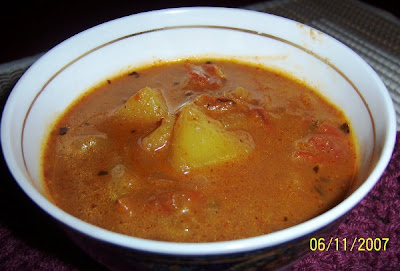
Puli Kozhambu

Tamarind is the fruit of the Tamarind tree (Tamarindus Indica) and is native to tropical Africa.It reached India a long long time ago and then the Persians and Arabs who called it "tamar hind" or "Indian date".Most of its colloquial names are variations on the common English term. In Spanish and Portuguese, it is tamarindo; in French, tamarin, tamarinier, tamarinier des Indes, or tamarindier; in Malaya, asam jawa; in India, it is tamarind or ambli, imli, chinch, etc
The food uses of the tamarind are many. The tender, immature, very sour pods are cooked as seasoning with rice, fish and meats.The ripened fruit pulp is edible and popular as a spice in Latin American and Asian cuisines.
Above info,picture and more on tamarind from here

My earliest memory of tamarind is when I was about 7 or 8 years old, in my paternal grandfather’s house in Trichy, collecting the seeds so that I could rub them on the floor till they were hot and then press them on an unsuspecting cousin’s hand and quickly run away as they let out a surprised yelp! The same magnificent tree was the one under whose cool shade we used to rest on scorching summer afternoons with our library books.

Tamarind is the base for many South Indian dishes and even to non South Indians who are aware of this, it never ceases to surprise them that there is a dish like this which is based solely on it; no dal added like in Sambar, no ground masala with coconut to balance the sourness – Puli Kozhambu.
In Tamil, Puli means tamarind and Kozhambu is a generic term for curry(gravy) dishes. Well, my Dad had an English translation for this dish which used to annoy my mother to no end – “Ah!Tiger Broth!” he would say, snickering at his own joke – “Puli” in Tamil, pronounced slightly differently means "tiger". It's one of my comfort foods today and I still remember that joke.


Puli Kozhambu (Tamarind based Spicy Curry)

Ingredients:

Pumpkin – 100gm, peeled and chopped into 1” squares
Garlic – 6-8 cloves
Onion – 1 big, sliced or 1 cup shallots peeled
Tomatoes – 1 big chopped
Thick Tamarind pulp – about 150 ml (Soak a lime sized piece in warm water, squeeze to extract pulp and filter)
Coriander (dhania) powder – 3 tsp heaped
Chilli powder – 2 tsp
Salt to taste
Veg. Oil – 1 tbsp
Til Oil – 1 tbsp

Tempering (Thalimpu)
Mustard (rai) – 1 tsp
Fenugreek (methi) seeds – ½ tsp
Asafoetida powder (hing) - pinch
Curry leaves – 6-7

Method:
1.Cook chopped pumpkin in water till 3/4th done. Peel garlic and crush lightly
2.Heat a kadai(wok) and add both the oils, when it heats up, add mustard.Wait for the mustard to pop,then add the fenugreek seeds and asafoetida , as soon as the seeds change colour, add the washed curry leaves. Reduce heat, add garlic cloves and fry on low for 3-4 minutes.
3.Add sliced onions or whole shallots and sauté on low till translucent. Add the chopped tomatoes and fry till pulpy.(about5 minutes)
4.Add the coriander powder and chilli powder and fry 1 minute. Add tamarind pulp along with 100ml water and salt and bring to a boil. Once it is boiling, add the chopped pumpkin and reduce flame to medium. Cover and cook for 10-15 minutes till the tamarind is cooked and doesn’t smell raw. Adjust the salt and cook for 5 - 10 minutes more till the gravy is reduced to little more than half.
5.Serve with steamed rice or dosais.

Note: Pumpkin makes this dish a bit sweet which I like because the gravy itself is sour and spicy and that makes for a good mix of flavours. But if you (like my husband) don’t prefer the sweetness to intrude on the spice, you can replace pumpkin with:


-Sticky potato/Colacassia (Arvi)boiled and cut into 1" pieces
-Okra -1" pieces lightly sautéed
-Vadaam – sun dried balls made out of a mixture of urad dal flour,spices and salt with a lot of variations which include onions and ash gourd pieces.Used to be handmade at home, but now is readily available in most grocery stores. They are fried as part of the tempering before adding to gravies and add an instant burst of spice and flavour.


Monday, November 5, 2007

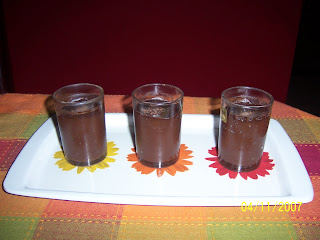
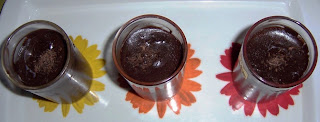
Sweet Beginnings - Chocolate Pudding

This amazingly rich dessert is one I tried after seeing it on Jugalbandi, where Jai and Bee had in their meticulous style made it seem so simple that I just had to try it out! I made it for a dinner we hosted, on the eve of my husband’s birthday, and it turned out to be the perfect sweet ending for a lovely evening.

And since J&B have been a major inspiration for me to start my own food blog, I thought it appropriate that I should begin my blog with this dish – my photos don’t do as much justice though, I hope that in time they will improve and look as good as the dish itself.

I increased the proportions from the original recipe as well as omitted the lavender touch from J&B’s recipe since I didn’t have any on hand and not the faintest clue on where to find any in this city!

It’s an easy recipe and a surefire crowd pleaser; plus it doesn’t take much time to set, so you can make it just an hour or so before the guests arrive. OR if it’s just for you and yours, all the more reason to have something so delicious to enjoy with minimum effort.

Jai and Bee – this one is for you! Love your blog!


Chocolate Pudding

Ingredients:

Dark chocolate, chopped – 225gms(I used Lindt which is fairly easy to find in Indian cities)
Sugar – 1 cup
Milk – 2 ½ cups
Corn flour – 3 tbsp
Egg yolk – 1
White butter (unsalted) – 2 tbsp
Vanilla essence – ½ tsp
Salt – a pinch

I added these variations recommended by J&B
Cocoa powder – 1 ½ tsp
Instant coffee powder – 1 tsp
Bailey’s Irish Cream – 1 tbsp

I followed the detailed method and instructions from Jugalbandi which you can find here and since it looked so intoxicating, poured the pudding into 8 shot glasses filled up 3/4th of the way.

Though initially, I felt that this might be a tad less quantity wise, it turned out to be just right. You could increase the milk by another 1/4th of a cup for more volume and for a less concentrated taste.
Though the recipe called for one egg yolk, since that was also described as optional, I didn't double it for my recipe and used only one egg yolk.


Desserts