Showing posts with label banana. Show all posts

Thursday, March 17, 2011

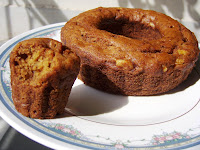
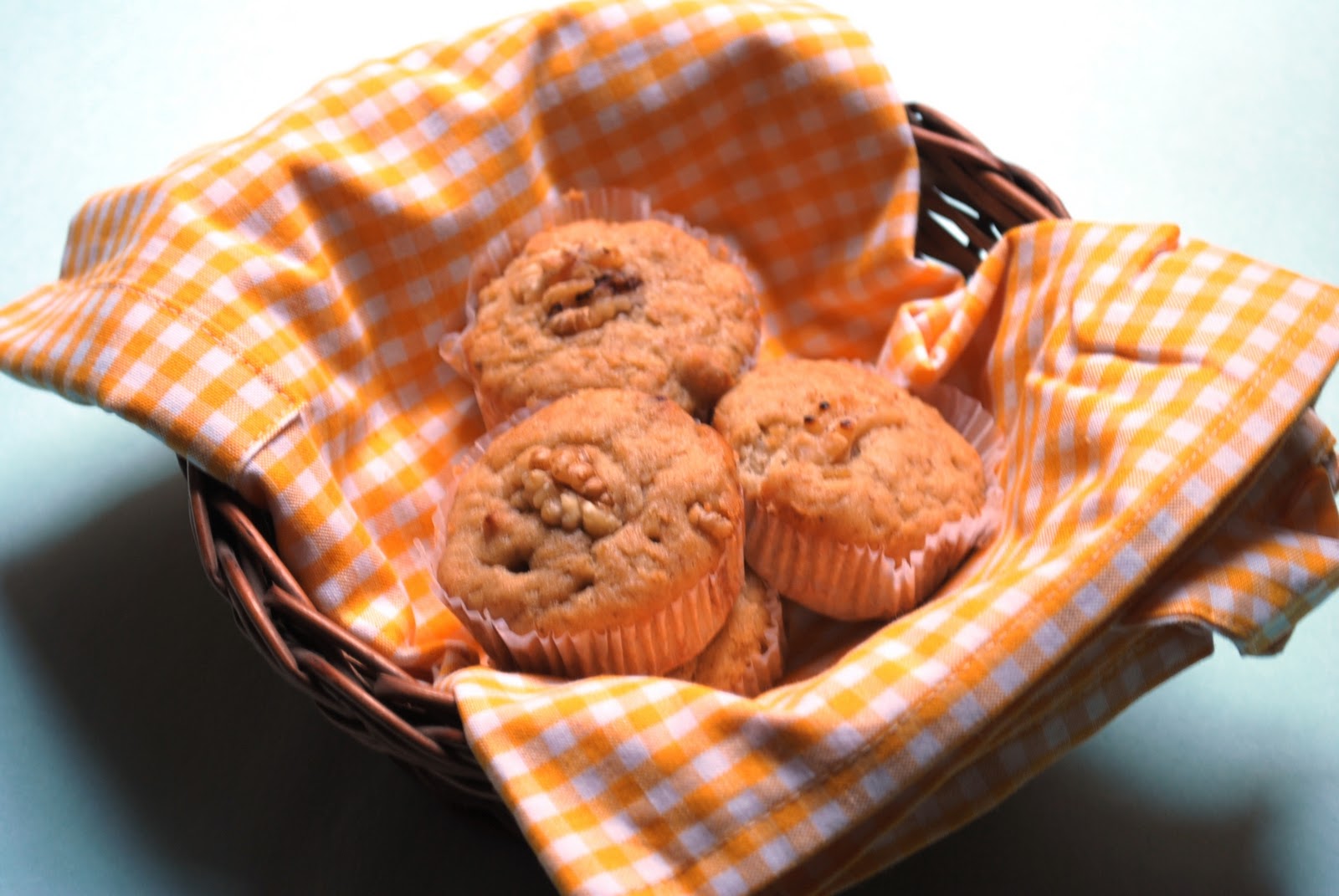
Eggless Banana Walnut Muffins

MIL is staying with us this month - I had to really persuade her to come this time, since she was quite reluctant to make the trip from Coimbatore. Age related hearing loss has made her a little reluctant to socialize. But she did come finally and its been nice to have her here with us. My daughter especially seems to bloom a litte bit more every time one of her grandparents is around.

We took her out for lunch last weekend (Punjab Grill - very good food and great service - pleasantly surprised) and while walking around the mall, she spotted some cupcakes at a cafe. She asked about them but they had egg in them, so I decided to make some eggless muffins at home. Banana muffins seemed the easiest and she likes nuts, so decided to modify this recipe of mine for white chocolate walnut muffins, to make some banana walnut muffins.

It barely took me about an hour from start to finish. I packed a couple in my daughter's tiffin the next day and she couldn't stop beaming with delight at the chocolate chips. This is a light muffin but nice and flavourful.The sugar can be brought down a notch since it was a little sweet for me.

Eggless Banana Walnut  Muffins
Ingredients:
1/2 cup butter
1/2 cup brown sugar (I would bring this down by a couple of tablespoons)
1 banana (medium)
3 tbsp milk
3/4 tsp vanilla essence
1 cup maida
1/2 tsp baking powder
1/2 tsp baking soda
salt - a pinch
1/2 cup walnuts (toasted on a skillet or in an oven, peeled and broken into half) You could use chocolate chips, I did that for half of them because my daughter wanted some.

1. Blend the banana with the milk and vanilla essence with the hand blender into a puree.
2. In a bowl, cream the butter and brown sugar with a hand blender till light and fluffy. Add the banana puree and then blend again.
3. Sift the flour with the salt and the baking powder into thebowl of batter and fold in gently till just combined. Do not overmix
4. Fold in the walnuts (or the chocolate chips) reserving a few to decorate on top. Pre-heat the oven to 180C (350F).
5. Grease a muffin pan or line them with cupcake liners. Drop spoonfuls of batter into the muffin pan and bake for 15-20 minutes (took 20 minutes for me). A toothpick should come clean when poked into the muffins.
6. Let stand till cool and then unmould from the muffin pan.


Sunday, October 25, 2009

Banana, Pineapple and Coconut Muffins

These are delicious muffins full of flavour with a rich fruity flavour - one of those amazing treats you can find on Meeta's blog - What's for Lunch Honey!

She calls them Muffins Exotica - and exotic they are indeed, it has banana, pineapple and coconut and for good measure I added some honey as well! The kids who had come over for a playdate with my daughter wolfed them down in no time . I also replaced 1/2 a cup of flour with wheat flour (atta) and it made a good snack to take to work.

Tuesday, April 21, 2009

White Chocolate Muffins (Eggless) and a Breakfast Picnic

Yes, you heard that right! A Breakfast picnic is what we did a couple of weekends back - the weather had been absolutely brilliant in the early am that whole week, so four families with 6 kids and a dog set out at 7 30 am to Lodhi Gardens (Delhi).
We have "our" spot, right under a big old tree with some benches nearby, which we use during the winters (we did two last year and one the year before) but since it was so early in the morning, that was taken over by people doing yoga and stuff. Winters we normally reach around 11 30 when the sun is out and there are fewer people at that time.

So we picked another spot a little further away - we were shaded by the big tomb and some trees cool breeze blew all around us - it was perfect! We spread our dhurries, poured out the tea from the thermos and brought out the food. The cheese sandwiches and rava idlis with gun powder came out first along with a whole bottle of freshly squeezed orange juice. So fortified, the kids went adventure hunting looking out for tunnels, ponds and "secret hiding" places along with some of the adults and the dog. The rest of us, lay back and chatted looking at the blue skies and the spring flowers and almost dozing with our eyes half-closed.

The children were back in no time chattering on about all the "treasures" they had unearthed and dived right back into the food - aloo parathas and gobi parathas, bananas and grapes. Games of catch followed and then turned into a quest for finding ladybugs in the bushes and flowers accompanied by squeals of delight when one would land on a tiny hand. It was worth all the "effort" of waking up on a Saturday morning and getting the kids ready in time - and I treasure these times so much because I have never had the chance to do these things in Mumbai or Chennai. Delhi is blessed with these wide, open spaces which are so easily accessible and I'm glad to be making the most of it while we are here.

Besides the rava idlis, I brought along these white chocolate muffins which I had made the previous day. I made them without eggs since MIL is visiting and she doesn't eat eggs. I added the banana to make up for the moisture content and consistency. And to complete my itch for one weird ingredient per recipe I threw in some chopped candied amla (gooseberry) into the batter. The muffins were nice and moist; some of you might want to add a bit more sugar if you prefer your muffins sweeter. You could also chop more walnuts and add them right into the batter. Replacing the white chocolate with dark chocolate is another option.

This goes to Joelen's Tasty Tools event - where this month's tool of choice is Muffin Pans.

White Chocolate Muffins (Eggless)

Wheat Flour (atta) - 1.5 cups
Refined flour - 3/4 cup
Baking powder - 1.5 tsp
Baking soda - 1/2 tsp
Castor Sugar - 1 cup

1/2 cup unsalted butter
1/2 mashed banana
white chocolate - 100gms, chopped into pieces
1/2 - 3/4 cup milk
1 tsp vanilla essence

Walnuts - 6, broken into halves
Candied amla - 2 tbsp, chopped (optional)

1. Sieve both the flours with the baking powder, soda and the powdered sugar. Keep aside.
2. Melt the white chocolate pieces in a microwave at 30 second intervals till soft. You can also put the chocolate into a steel bowl which goes into another vessel half filled with water and then heat it on the stove, stirring till it melts.
3. When the chocolate cools a bit, add it to the mashed bananas along with butter and vanilla essence.
4. Mix the flour into this mixture and whip with a blender. Add the milk a little at a time till the mixture is thick and creamy, but not too runny.
5. Add the chopped candied amla, mix and drop spoonfuls of the batter into muffin covers or a greased muffin tray, taking care to fill only three fourth of the mould.
6. Place half a walnut into the top of each muffin and then bake for 14 minutes in a pre-heated oven at 180C. Cool completely.

Friday, July 18, 2008

Banana Muffins


We had another baking session with the kids during the holidays. This time with three 3 year olds and one six year old. Decided to bake muffins this time, these individual cakes always manage to thrill the little ones! I had a couple of ripe bananas lying around so I decided to make Banana Muffins and also throw in some walnuts.


The bananas, milk, honey, eggs and walnuts make for a power packed treat for the little ones - rich in calcium, iron, Vitamin A, protein, essential fatty acids and potassium. It takes hardly anytime to prepare and my little helpers gave me a hand with mixing the ingredients and pouring out the batter.


The muffins when they were baked were really moist and soft, though they turned out a tad salty....not sure whether it was more salt or the combination of cinnamon and salt. Will cut down on both the next time.

The banana muffins are on their way to the Think Spice...Think Nutmeg event being hosted this month by Aparna of My Diverse Kitchen. Think Spice was originally hosted by Sunita's World.


Banana Muffins


1/2 tsp cinnamon (can be replaced with vanilla essence)

1/2 tsp nutmeg (grated)

1 cup whole wheat flour (atta)

1½ cups refined flour (maida)

2 tsp baking powder

¼ tsp baking soda

½ cup honey

1 egg

½ tsp salt (would change it to 1/4 tsp next time)

1 cup milk

3 tbsp oil

3 ripe bananas, mashed

Half a cup of chopped walnuts (lightly toasted)


1. Preheat oven to 180C.

2. Mix the wheat flour, refined flour, baking soda, baking powder, salt, nutmeg and cinnamon together in a bowl.

3. In another bowl, mix the honey, egg, milk, oil and add the dry ingredients until just combined. At the end mix in the chopped walnuts.

4. Grease a muffin pan or line cupcake moulds with cupcake papers.

5. Fill the muffin moulds or cupcake liners till the top and bake for 35-45 minutes till they are golden brown and a toothpick inserted comes out clean.

6. Remove to a rack and cool completely before unmoulding.

For a superb eggless version, take a look at Vaishali's recipe.

Sunday, May 4, 2008

Pumpkin Walnut Bread - Eggless


Pumpkin is not a well liked vegetable by certain members of this house because of its sweet taste which "spoils" the taste of the dish. *ahem*.
I
, on the other hand, love its orange flesh, the way it takes on the flavours of the dish it is cooked in - spicy if put into a puli kuzhambu or sambar, mustardy with potatoes in a typical Bengali dish, plumping up the volume of a soup, melding beautifully into this risotto and sweet when put into a pie.

The ones we get here are usually those huge green and white streaked ones.....simply called "kaddu" - no differentiation into varieties (I wouldn't know a kabochon if it stared me in the face!). Just ask the sabziwallah to cut a 500gm piece and you're good for a week.

Well, this time our friendly neighbourhood Mother Dairy outlet had the smaller variety. Peach coloured skin and a nice plump shape. I picked it up immediately; I would figure out what to do with it later. A couple of days later, I remembered a pumpkin loaf recipe I had seen on Elise's Simply Recipes - the recipe was adapted from Fannie Farmer and seemed fuss-free.

I laid out the pumpkin to roast in the oven while I went out and finished some chores. When I came back, the pumpkin flesh was cooked and ready. l I started removing the rest of the ingredients for the bread - and then discovered that there were no eggs at home! I hate when this happens (as if I have anyone else to blame but myself) and then my latent substitution avatar just takes over.
The prospect of going out even for the 3 minute walk to the store to buy eggs was just too much to contemplate in the heat of the afternoon. Technically, I could have waited till evening, but nope- I HAD to finish baking the bread then and there!

I remembered baking a Walnut & Ginger Bite ring sometime back which didn't have eggs, so I knew it was possible. I went to work modifying the original recipe. Eggs basically bind the ingredients or help in rising, so I put in one teaspoon of baking powder for the leavening and though the pumpkin may have been enough for the moisture, I added half a ripe banana as well.

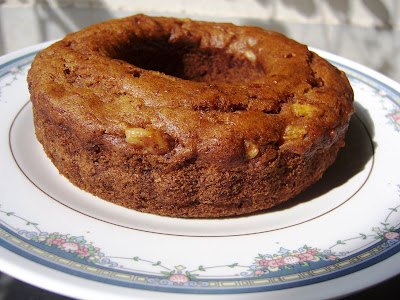
The bread was a beautiful brown colour when it came out of the oven and the house was redolent with the aroma of cinnamon and nutmeg. It had a brown crust and a nice moist texture to it. Not too sweet so I didn't mind having it with breakfast and it makes a great tea time treat too. If you want to have it for dessert, its delicious with a scoop of vanilla ice cream. It tasted even better the next day, something I have often found with baked stuff.

I do have a theory about cinnamon though - I think it heightens the taste of salt in a dish - its happened in a restaurant once and with a carrot cake I baked a couple of years back. This time too, though not very salty, you could taste a bit of salt in the bread and I think it was because of the cinnamon in it.


Susan of Food Blogga is hosting Beautiful Bones - an Osteoporosis Food Event "to alert women to the potential risks of osteoporosis and encourage them to take steps to protect their bones at every age". This event is on the whole month of May which is National Osteporosis Awareness Month.Along with anaemia, Indian women are particularly susceptible to osteoporosis; genetics have much to do with it (Asians and Caucasian women are at greater risk) but also the fact that a high percentage of Indian women suffer a great deal from malnutrition - either due to a poor diet while growing up (many times due to a gender bias) or their own negligence of their health while taking care of the others in the family. It is estimated that 50% of healthy Indian women over 50 years of age have low bone mass.

I got concerned with this gap when I saw a direct correlation between the reduced intake of calcium in my MILs diet and her increasing joint problems and reduced bone mass. She put it down to age, but I connected to the fact that she was consistently reducing her milk, yoghurt and other calcium intake after my FIL died (culturally ingrained reactions to societal pressure are a whole another post!)

A diet rich in calcium and Vitamin D (adequate vitamin D is required for proper absorption of calcium) during childhood and adolescence goes a long way in preventing osteoporosis later.
But that doesn't mean that calcium is not as important after your teens. Women in the age group 25-50 years required 1000mg of calcium per day while women over 65 years of age require 1500 mg per day.

Don't feel like glugging a glass of milk everyday? Milk is not the only source of calcium; in fact it is difficult to digest and may not give you all the calcium you need. Think of other calcium rich sources:

1. Leafy greens like spinach (paalak), lettuce, spring onion greens and other local greens (keerai) like methi (fenugreek), suva (dill), sarson (mustard greens), khatta paalak, haak, molai keerai/arai keerai/siru keerai(all amaranth varieties), murunga keerai(drumstick leaves),agathi keerai,poonaganni keerai,pulichai keerai,manathakali keerai.

2. Vegetables like cabbage, broccoli, green beans, bhindi (okra), pumpkin/squash, radish (mooli) , cauliflower, carrots, eggplant (brinjal), brussel sprouts, asparagus and celery

3. Herbs and spices like coriander, basil, thyme, rosemary, fennel, oregano, garlic, cloves and cinnamon.

4. Nuts,seeds and beans like sesame seeds (til), mustard seeds (rai), walnut (akhrot), almond (badaam), cashewnut (kaju), kidney beans (rajma, lobia), chickpeas (kabuli chana, kadala), water chestnuts (singhada), lotus seeds (makhana), melon seeds.

5. Fruits like tomatoes, oranges, guava, banana, chikoo (sapodilla), coconut, figs (anjeer) and custard apple

6. Milk products like yoghurt, cheese and paneer and Soy products like tofu, soya beans, soy milk

Apart from calcium intake, it is important that it gets absorbed by our body:

  • Vitamin D aids in absorption of calcium; sources rich in Vitamin D are
  • High consumption of sodium (salt) and caffeine (whether in coffee or colas) results in increased excretion of calcium.
  • Calcium through one's diet is better absorbed than through supplements.
  • While there are factors which may prevent complete absorption of calcium from sources like spinach, beets, celery and peanuts (oxalic acid) and whole grains, nuts and beans (phytic acid) - the decrease in the available quantity of calcium for absorption is relatively low.
  • Calcium interference with iron absorption or vice versa is not considered significant enough to affect normal intake when the intake of both is in typical moderate amounts.
Read more here on calcium, its importance, dietary sources and absorption.

While pumpkin is a moderate source of calcium (24mg per 1 cup) and cannot compare to greens and other vegetables in terms of calcium content, walnuts have about 100mg of calcium in every 100gm. What better excuse to indulge in this nutty bread!


Pumpkin Walnut Bread - Eggless

Ingredients:

Skinned and cooked pumpkin - 1 1/4 cup
(I followed the recipe instructions, cut the pumpkin into 4 parts and kept them cut side down on foil, cooked them in a pre heated oven at 200 C for 45 minutes. When it was completely cooled, I scooped the cooked flesh out of the skin, measured out what I wanted and froze the rest of it; You can also skin and chop the pumpkin and steam cook the flesh)

Flour - 2 cups (I used wheat flour 1 cup and refined flour (maida) 1 cup)
Vegetable oil - 3/4 cup (the original recipe uses olive oil)
Brown sugar - 1 cup (more if you want the bread to be sweeter)
Baking soda - 1/2 tsp
Baking powder - 1 tsp
Salt - 1/2 tsp (I would reduce it to 1/4 tsp next time)
Cinnamon powder - 1/2 tsp
Grated nutmeg - 1 /2 tsp
Water - 1/2 cup
Ripe banana - 1/2 mashed
Chopped walnuts - 1/2 cup (lightly toast the walnuts for 3-4 minutes to remove the skin, cool and chop.)

Method:

1. Pre heat the oven to 180C (350F), grease a loaf tin or a ring mould and keep aside.
2. Sift the flour, salt, baking soda,baking powder, cinnamon powder and grated nutmeg together.
3. In a big bowl, mix the cooked pumpkin with the oil, mashed banana, water and sugar till well combined.
4. To this add the mixed dry ingredients a little at a time mixing just as much as needed. If you find the batter too thick, add milk a teaspoon at a time till you get the required consistency - not pouring consistency but spoon dropping type.
5. Mix in the chopped walnuts gently and spoon into the prepared loaf tin or ring mould.
6. Bake for about 45-50 minutes or till a toothpick inserted in the middle comes clean. Mine took about 60 minutes but was quite moist inside and did not dry out.


Other calcium rich recipes:

Sindhi Sai Bhaji

Broccoli Soup

Sunday, January 20, 2008

Shaak - Winter Vegetables Gujarati style


Growing up in Mumbai, and particularly in an area where there was a predominantly Gujarati population, I ate a lot of Gujarati food - especially in school; my friend's dabbas were the most delicious ones on the block.
And unlike most of us who carried our lunch boxes packed in the morning, theirs would usually arrive steaming hot during lunch time, delivered by a dabbawalla or a family member.

What with my Dad being a complete foodie, we were also treated to visits to Thakkers in Central Mumbai, where their unlimited thalis were the most sumptuous meals one could imagine. They would lovingly ply us with those rotlis (small sized chapatis) topped with a generous spoonful of ghee, accompanied by a variety of daals, kadhis and shaak, till we could hardly breathe.
In summer there would be the dreamy aamras - golden mango pulp from the freshest Alphonso mangoes - to go with fluffy puris. This for me was even more coveted than the shrikhand (sweetened hung curd) which usually accompanied the puris.

And trains.....yes, trains were an unlikely place, but thats where we got our annual dose of Gujarati snacks, pickles and travel food, when we visited my grandparents down South.

The journey used to take a good 2-3 days then, and while we had lime rice, curd rice, tamarind rice and potatoes packed to last us for about a day and half surviving on station food and (awful) train "meals" after that, the Gujarati families we met (and became instant friends with their kids sharing Amar Chitra Katha comics and video games!) used to seemingly come prepared to feed the entire compartment for the next 4 days!

There was farsaan - theplas, khakras et al accompanied with chundo and green chutney, complete meals of rotlis and dry shaak, and of course sweets. What's not to like! especially since after a point the only way to entertain children in closed compartments is to ply them with food and hope that they sleep it off!

Gujarati cuisine comes from the NorthWestern state of Gujarat and is mainly vegetarian. It changes a lot from the coastal regions to the dryer interior regions, but the cuisine on the whole is centred around wheat breads,pulses and lentils, yoghurt based preparations and seasonal vegetables cooked with spices - either lightly steamed or shallow fried. Many of the dishes have a hint of sweetness to them, but there is a misconception that all Gujarati food is sweet. Sweets are much liked and along with snacks provide for a huge number of interesting regional recipes. While some of them are deep fried, there are also quite a few snacks which are steamed and very tasty. Read more about Gujarati cuisine here and more recipes on one of my favourite blogs; she hasn't posted in a while and I'm hoping she can come back soon....

Its been a long time since I cooked any Gujarati food....I remember cooking a lot of it when I got married and I used to miss the dhoklas, khandvi etc of Mumbai. I even made undhiyu once for Tamil New Year instead of the traditional 7 vegetable sambar, much to the consternation of MIL :)

I came across this recipe of Tarla Dalal recently and given that it seemed to be perfect for the winter vegetables available now, I set about making it with a few alterations.

Initially it sounded a lot like the famous dish Undhiyu - but it's a lot less complicated; the veggies don't need to be stuffed. I haven't come across this dish anywhere else though, atleast not by the name Panchkutyu Shaak - though it says its a traditional Gujarati recipe.

Purple kand in Delhi doesn't seem to be common and I substituted with elephant yam or suran.
Broad beans which are in season,instead of french beans also seemed like a good idea.
I added raw bananas to the recipe and used one big potato instead of baby potatoes and omitted the sugar in the recipe.
I also did not deep fry the muthias, preferring to steam cook them as in this recipe.

The dish with its mix of vegetables cooked together in the spice mixture tasted delicious; in some ways it could be compared to an avial, but it was bursting with a lot more flavour and the dhana jeera powder gave it a very distinctive taste.

Shaak - Winter Vegetables Gujarati Style


Ingredients:
Elephant yam or suran peeled and cubed - 1/2 cup
Broad beans - 1/2 cup cut into 3-4 pieces each
Ridge Gourd (turai/Peerkangai) peeled and sliced thickly - 1/2 cup
Peas - 1/2 cup
Raw Banana peeled and sliced thickly - 1/2 cup
One big potato - peeled and cubed - 1/2 cup

Tadka:
Cumin seeds (jeera) - 1 tsp
Mustard seeds (rai) - 1 tsp
Asafoetida (hing)- a pinch

Grind to a paste - 3 green chillies and 2 ' piece of ginger (cut down on chillies to lessen spiciness)
Reserve 1 tsp for muthia.

Dhania jeera powder (a staple in Gujarati kitchens) - 2 tsp
I used 1 tsp of jeera (cumin) powder and 2 tsp of dhania (coriander) powder

Turmeric powder - 1/4 tsp

Grated coconut - 1/2 cup
Chopped coriander - 1/2 cup

Oil - 1 tbsp
salt to taste

Methi muthia:

Wheat flour - 4 tbsp
Gram flour (besan) - 2 tbsp
Fresh fenugreek leaves (methi) - 1/4 cup washed and chopped
Oil - 1tbsp
Salt to taste
Ginger green chilli paste - 1 tsp
Turmeric powder (haldi) - a pinch
Asafoetida powder (hing) - a pinch

1. Mix all ingredients of muthia and make a dough adding as little water as is required.
2. Divide the dough into 6-8 portions and make small cylindrical rolls out of it.
3. Steam these muthia for about 10-15 minutes till they are well cooked- this is if you are using a stove top steamer where the water is brought to a boil and then the steamer with muthias kept inside on the stand. If using the microwave steamer, the cooking time will be much less.
4. Once done, cool and keep aside.

For the shaak:
1. Heat oil in a pan and add mustard seeds, when they pop add the cumin seeds and the asafoetida.
2. Add the chopped vegetables except the peas, ginger chilli paste, dhana jeera powder and turmeric powder. Saute for 3-4 minutes , then add 2 cups of water and bring to a boil, simmer and cook covered till the vegetables are cooked and the dish is almost dry.Halfway through add the fresh peas to the dish.
4. Add the coconut,coriander, muthias and cook for 2-3 minutes - if using frozen peas, then add the peas at this stage.
5. Serve hot with chapatis or rice.


Thursday, December 6, 2007

Raw Banana Cutlets

While the coconut tree is often described as “kalpavriksha” (wish fulfilling tree), I think of the banana tree as the real kalpataru, with almost every part being of some use.

The ripe fruit liked by most people and probably one of the cheapest fruit available in India, is one of the first foods fed to babies being weaned and is enjoyed by children and adults alike. The raw fruit is cooked – mostly in South Indian cuisine – and eaten like a vegetable.

Ripe or raw, the fruit is packed with Vitamin B, Vitamin C and potassium while having a high proportion of fibre too and a very low fat and sodium content. It is used by people to gain weight as well as lose weight. It can help constipation as well as help in stopping diarrhea.

Maybe a fruit of contradictions, but is also a ceremonial fruit and the neivedyam (ritual offering) to the Gods, whether on festive occasions or for daily prayer, always includes it.
Pics above and alongside are from wikipedia
The flower too is cooked; vazhapoo poriyal (foogath) and vadais are quite popular in Tamil cuisine, though I hated the whole process of plucking and cleaning the flowers which used to make my hands so sticky – that no amount of scrubbing with buttermilk or Teepol (does that even exist now?) used to get them clean.


The tender core of the banana stem is also cooked (vazhathandu poriyal) and is supposed to be very beneficial for the kidney. In fact, the juice of the stem is recommended by even mainstream allopathy doctors for flushing out kidney stones.

The banana plant (often mistaken for a tree because of its tall stem) is still one of the first plants to be planted in the backyard of a house in South India. The leaves are used on festive occasions as plates for the traditional meal to be served on (completely eco friendly!) and also to adorn the threshold or puja room. No wedding preparation begins without the banana stem, complete with the flower and a bunch of unripened fruit hanging from it, being first tied to the entrance of the hall where the ceremony will take place.
The leaves were also used till recently, to carry packed food while travelling; in cooking they are used to wrap and steam food, a process which imparts a distinct flavor to the dish cooked in it.

The banana plant is also a source of fibre which has been long used in production of traditional textiles and yarns, most notably in Japan. Banana fibre is also used in making banana paper usually for artistic purposes. More on banana here

Plaintains are a starchier and coarser variety of the same genus but are different from bananas. For a delightful discourse on the differences between bananas and plantains, look here and images and more info at IFR

There was a phase some years back when I was obsessed with cutlets, I used to try all kind of cutlets – my poor guests didn’t know what they were eating half the time, but they used to put on their bravest smiles and reach for the plate being waved in their faces!
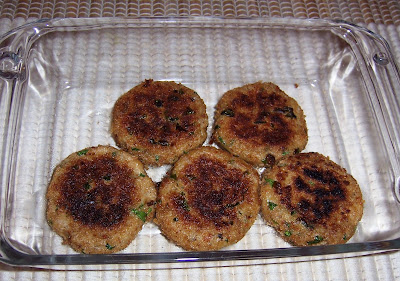
So amid, the arvi (sticky potato) tikkis and rajma patties there came a time when there appeared raw banana cutlets. This was one of the cutlets which didn’t make one wonder what it was made of – the starchiness inherent made it taste a lot closer to potatoes than the others.

I initially followed a recipe from Sanjeev Kapoor, but over time I have just followed my own preferences and made it with whatever is convenient and at hand. I usually add crushed roasted peanuts and stay away from the “potato to bind”, since it’s not that difficult to shape them and keep them from falling apart by using some breadcrumbs or flour.

This recipe goes to Weekend Herb Blogging – which is being hosted this week by Simona @ Briciole


Raw Banana Cutlets


(Makes 5-6 cutlets)

Ingredients:
Raw Bananas – 2 medium sized
Flour (all purpose/whole wheat) – 2 tbsp
Bread Crumbs – ½ cup
Cumin powder – 1 tsp
Chilli powder – 1 tsp
Peanuts – roasted and crushed – ¼ cup
Coriander leaves – handful – cleaned and chopped
Amchur (raw mango) powder – ¼ tsp or 1 tsp lemon juice
Salt – to taste
Oil – to shallow fry or grill

Method:
1. Pressure cook the raw banana for 4-5 whistles (15 minutes approx) till it is cooked. Just about 1/4 cup of water in the vessel is enough.
2. Cool and peel the skin, mash the bananas with fingers or back of a fork.
3. Add the chopped coriander leaves, chilli powder, cumin powder, amchur and salt. Mix well and then add 1 tbsp of flour and ¼ of the bread crumbs.
4. The mixture should come together in your hands, if it sticks, add some more flour a tsp at a time till you are able to shape cutlets with your hand.
5. Shape about 6 equal cutlets, roll them in the remaining bread crumbs and keep aside.
6. Heat a tava (griddle) and add about 1 tbsp oil to it, arrange the cutlets on the tava. Drizzle about a tsp of oil over the cutlets and cook them on a medium flame for about 3-5 minutes, turn them and cook for another 3 minutes, drizzling another tsp of oil if necessary.
7. Alternatively, you can grill them in a pre heated oven at 180C for about 5 to 7 minutes on each side, smearing oil on both sides before putting them in.
8. Serve warm with mint chutney.