Showing posts with label peanut. Show all posts

Tuesday, March 31, 2009

Som Tam Mia Noi - Thai Cucumber Salad

Thai food has become very popular in India in a very short time - it has Chinese food to thank of course, for laying the ground for "phoren cuisine" in India. (It is a different matter, that most Chinese food served here is not even halfway authentic!). But it is undoubtedly the fact that Thai cuisine has a lot of similarities to Indian cuisine which has made it so readily acceptable to our palate. My South Indian roots definitely play a large part in making me salivate at the thought of coconut milk based fiery curries served over steamed rice.

But there is a lot to Thai cuisine other than its Red, Yellow and Green Curries. Thai cuisine is about striking a balance between the five different flavours - sweet,sour,pungent,bitter and salty. There can be umpteen variations in the sources of these flavours but achieving a harmony between them is what makes Thai cuisine so interesting and flavourful. Many dishes also have regional variations depending on whether they come from the North, North East, Central or South of Thailand.

There aren't many restaurants which make Thai food without overloading their curries with coconut milk and even fewer ones which use authentic Thai ingredients. Many Chinese restaurants also have a Thai section which may have a couple of noodle dishes, a few curries and some of the popular soups but don't go beyond that. When I was in Mumbai I used to love Thai Ban in its 6 table version when it began on Turner Road, Bandra - we enjoyed a lot of cheap but amazing meals there. I have been again to its swankier version about 5 years back and wasn't impressed at all - and if some of these reviews are anything to go by, it isn't even exclusively Thai anymore.

In Chennai, I loved Benjarong on TTK Road - they have an excellent variety of dishes and though the fish sauce has definitely been toned down to defer to predominantly vegetarian sensibilities, you can make out that they use traditional Thai ingredients as far as possible. Lotus at The Park in Chennai will also be remembered by me as a place where I had one of my most memorable meals and probably one of the most expensive too! Their fish steamed in pandanu leaves was exquisite.
Delhi has me still looking for a good reasonably priced Thai meal; I was sorely disappointed by Ego Thai - their curries were so creamy and bland and when I asked why it didn't have the traditional pungency, the waiter offered me chilli sauce!!! Kitchen in Khan Market does a fabulous Tom Yum Soup and two curries but not much else by way of Thai, since they have a mixed menu.

Which is why, when I'm really craving Thai food, I prefer making it at home. A friend and her daughter were visiting from Australia and after deciding that they would have been plied with enough 'desi" food for the last month or so they had been in India, I decided to go for Thai.

There was a variation of the Som Tam salad, Thai Noodle Soup and Thai Red Curry with steamed rice. It was a really soul satisfying meal for me - I hoped my guests liked it too! I will start with the salad and be posting the recipes of the other dishes in subsequent posts.

Som Tam ("som" means sour and "tam" means pounded) usually refers to a raw papaya salad which is spicy, sour and sweet - what I made was Som Tam Mia Noi - where Mia Noi means a "minor wife" - something which is explained here as referring to the variation in ingredients like a husband who has many wives!

Well, after that delightful explanation - lets get down to basics. I used just cucumber and cherry tomatoes since I wasn't sure whether the 8 year old (like many her age!) would be fussy about certain vegetables. You can use carrots, beansprouts and even cooked prawns. Since it was a vegetarian meal, I substituted the fish sauce (nam pla) which is usually a key ingredient, with soy sauce and palm sugar with a bit of jaggery. Pounding the garlic, chillies and jaggery along withn lime juice really combined the flavours and I would recommend it to simply mixing them together. I also added a dash of Fab India's Salad Dressing Thai Style - topped with some crushed and roasted sesame seed and peanuts it was really delicious.

Som Tam Mia Noi
goes to A Fruit A Month (AFAM) - Cucumbers, which is being hosted by Neha of easyntastyrecipes and whose original creator is Maheswari of Beyond the Usual.

Som Tam Mia Noi


Ingredients:

Cucumber -2 medium, fresh - peeled and cut into strips or slices
Cherry tomatoes - 5-6 halved

Dressing:
1 green chilli chopped
2 tbsp lime juice
2 cloves garlic chopped
1 tbsp grated jaggery
1 tbsp soy sauce
1/2 tbsp Thai Style Salad dressing
Salt to taste
1 tbsp roasted and crushed peanuts
1 tsp roasted sesame seeds

Method:
1. Pound the ingredients for the dressing together and keep aside. Add salt carefully since the soy sauce and salad dressing will both have salt in them as well as the seasoned cucumber.
2. Slice the cucumber and keep aside for 5 minutes after sprinkling a bit of salt so that the water drains out of it - don't keep it for too long, else it will turn dry.
3. Mix in the cucumber and the cherry tomatoes with the dressing and serve - I like it chilled.

Wednesday, January 16, 2008

Sizzling Sesame Noodles

The last of the three dishes I made for a delicious dinner, you can find the burnt ginger rice and vegetables in hot garlic sauce here and here. All recipes are adapted from Sanjeev Kapoor's "Best of Chinese Cooking".


This one has the lovely taste of sesame and peanuts in it, something which is very much appreciated by our Indian palates. It's a simple recipe and cooks very fast - ideal for impromptu dinners since the ingredients are usually readily available in most of our kitchens.

The original recipe had bean sprouts in it,which I replaced with green pepper.

This recipe is quite high on the heat meter, so cut down on the green chillies and chilli sauce if you would prefer it less spicy.


Sizzling Sesame Noodles


Ingredients:

Noodles - 200 gms

Sesame oil (Til oil) - 1 tbsp

Spring onions - 2

Green chillies - 1

Garlic - 3-4 cloves

Roasted peanuts - 1/4 cup

Oil - 1 tbsp

Soy sauce - 1 tbsp

Chilli sauce - 2 tbsp

Pepper powder - 1/2 tsp

Green pepper - 1 sliced

salt to taste

Toasted white sesame seeds (ellu in Tamil, til in hindi) - 1 tbsp

Vinegar - 1 tbsp

1. Boil noodles in sufficient water till just about cooked. Remove, drain well and mix in sesame oil. Keep aside.

2. Slice spring onions finely, chop the greens and keep aside for garnish. Peel and finely chop garlic. Crush roasted peanuts coarsely.

3. Heat oil in a wok, add garlic, green chillies, spring onions and stir fry on high for 2 minutes.

4. Add boiled noodles, soy sauce, chilli sauce, pepper powder, salt to taste and stir fry for 2-3 minutes.

5. Add crushed peanuts, toasted sesame seeds, green pepper and vinegar; continue cooking on high heat for a minute tossing continuously. Serve hot.


Thursday, December 6, 2007

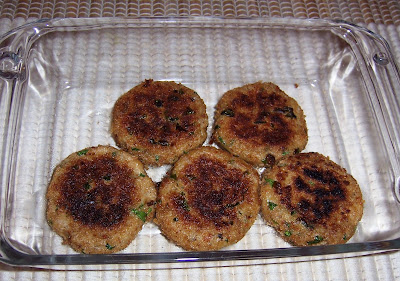
Raw Banana Cutlets

While the coconut tree is often described as “kalpavriksha” (wish fulfilling tree), I think of the banana tree as the real kalpataru, with almost every part being of some use.

The ripe fruit liked by most people and probably one of the cheapest fruit available in India, is one of the first foods fed to babies being weaned and is enjoyed by children and adults alike. The raw fruit is cooked – mostly in South Indian cuisine – and eaten like a vegetable.

Ripe or raw, the fruit is packed with Vitamin B, Vitamin C and potassium while having a high proportion of fibre too and a very low fat and sodium content. It is used by people to gain weight as well as lose weight. It can help constipation as well as help in stopping diarrhea.

Maybe a fruit of contradictions, but is also a ceremonial fruit and the neivedyam (ritual offering) to the Gods, whether on festive occasions or for daily prayer, always includes it.
Pics above and alongside are from wikipedia
The flower too is cooked; vazhapoo poriyal (foogath) and vadais are quite popular in Tamil cuisine, though I hated the whole process of plucking and cleaning the flowers which used to make my hands so sticky – that no amount of scrubbing with buttermilk or Teepol (does that even exist now?) used to get them clean.


The tender core of the banana stem is also cooked (vazhathandu poriyal) and is supposed to be very beneficial for the kidney. In fact, the juice of the stem is recommended by even mainstream allopathy doctors for flushing out kidney stones.

The banana plant (often mistaken for a tree because of its tall stem) is still one of the first plants to be planted in the backyard of a house in South India. The leaves are used on festive occasions as plates for the traditional meal to be served on (completely eco friendly!) and also to adorn the threshold or puja room. No wedding preparation begins without the banana stem, complete with the flower and a bunch of unripened fruit hanging from it, being first tied to the entrance of the hall where the ceremony will take place.
The leaves were also used till recently, to carry packed food while travelling; in cooking they are used to wrap and steam food, a process which imparts a distinct flavor to the dish cooked in it.

The banana plant is also a source of fibre which has been long used in production of traditional textiles and yarns, most notably in Japan. Banana fibre is also used in making banana paper usually for artistic purposes. More on banana here

Plaintains are a starchier and coarser variety of the same genus but are different from bananas. For a delightful discourse on the differences between bananas and plantains, look here and images and more info at IFR

There was a phase some years back when I was obsessed with cutlets, I used to try all kind of cutlets – my poor guests didn’t know what they were eating half the time, but they used to put on their bravest smiles and reach for the plate being waved in their faces!
So amid, the arvi (sticky potato) tikkis and rajma patties there came a time when there appeared raw banana cutlets. This was one of the cutlets which didn’t make one wonder what it was made of – the starchiness inherent made it taste a lot closer to potatoes than the others.

I initially followed a recipe from Sanjeev Kapoor, but over time I have just followed my own preferences and made it with whatever is convenient and at hand. I usually add crushed roasted peanuts and stay away from the “potato to bind”, since it’s not that difficult to shape them and keep them from falling apart by using some breadcrumbs or flour.

This recipe goes to Weekend Herb Blogging – which is being hosted this week by Simona @ Briciole


Raw Banana Cutlets


(Makes 5-6 cutlets)

Ingredients:
Raw Bananas – 2 medium sized
Flour (all purpose/whole wheat) – 2 tbsp
Bread Crumbs – ½ cup
Cumin powder – 1 tsp
Chilli powder – 1 tsp
Peanuts – roasted and crushed – ¼ cup
Coriander leaves – handful – cleaned and chopped
Amchur (raw mango) powder – ¼ tsp or 1 tsp lemon juice
Salt – to taste
Oil – to shallow fry or grill

Method:
1. Pressure cook the raw banana for 4-5 whistles (15 minutes approx) till it is cooked. Just about 1/4 cup of water in the vessel is enough.
2. Cool and peel the skin, mash the bananas with fingers or back of a fork.
3. Add the chopped coriander leaves, chilli powder, cumin powder, amchur and salt. Mix well and then add 1 tbsp of flour and ¼ of the bread crumbs.
4. The mixture should come together in your hands, if it sticks, add some more flour a tsp at a time till you are able to shape cutlets with your hand.
5. Shape about 6 equal cutlets, roll them in the remaining bread crumbs and keep aside.
6. Heat a tava (griddle) and add about 1 tbsp oil to it, arrange the cutlets on the tava. Drizzle about a tsp of oil over the cutlets and cook them on a medium flame for about 3-5 minutes, turn them and cook for another 3 minutes, drizzling another tsp of oil if necessary.
7. Alternatively, you can grill them in a pre heated oven at 180C for about 5 to 7 minutes on each side, smearing oil on both sides before putting them in.
8. Serve warm with mint chutney.